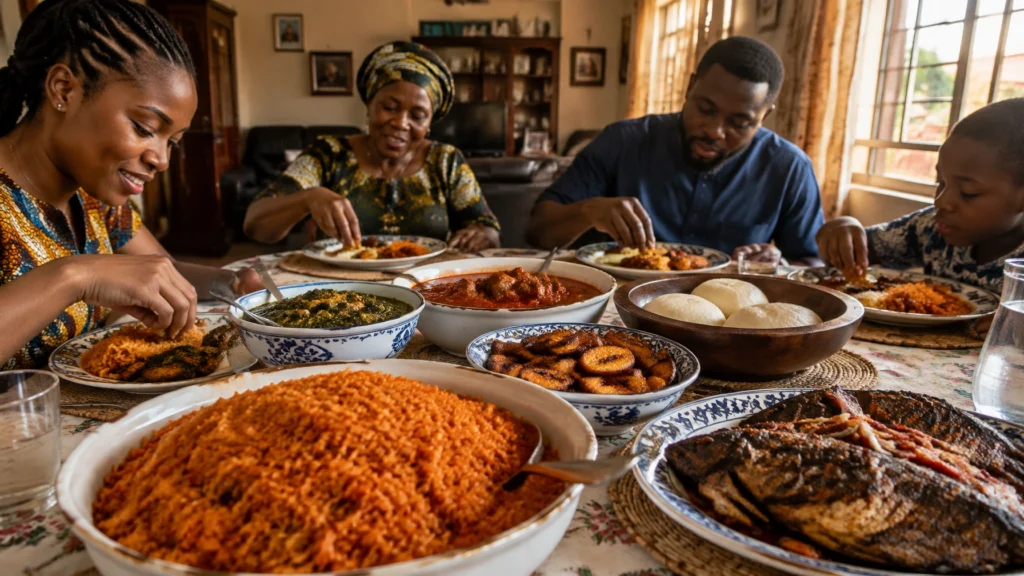
Illustrative documentary-style image of a family meal; it does not depict a specific family or event.
The best-known Nigerian dishes range from jollof rice and suya to rich soups eaten with swallows such as eba and pounded yam. They reflect many food traditions, including Yoruba, Igbo, Hausa-Fulani and communities across the Middle Belt and Cross River, where soups, rice dishes, fermented foods and street grills each have a place at the table.
There is no single menu that represents every Nigerian community. Ingredients and methods vary by household and region, and many dishes have travelled well beyond the places with which they are most closely associated. Here are 25 traditional foods to know, with a quick guide to what they are and how people enjoy them.
Rice dishes to start with
| Dish | Regional association | Key ingredient | Commonly eaten with |
|---|---|---|---|
| Nigerian jollof rice | Across Nigeria; a West African dish | Rice, tomatoes and peppers | Chicken, beef or plantain |
| Fried rice | Popular nationwide | Rice and mixed vegetables | Chicken or other proteins |
| Coconut rice | Coastal and southern cooking | Coconut milk | Fish, meat or stew |
| Ofada rice with ayamase | Yoruba, southwest | Local rice and green pepper sauce | Meat and assorted offal |
1. Jollof rice
A one-pot rice dish cooked in a seasoned tomato-and-pepper base, jollof is shared across West Africa and has a particularly beloved Nigerian style. It is served with chicken, beef, fish or fried plantain; the smoky, slightly toasted flavour of party jollof is a memorable favourite.
2. Nigerian fried rice
Usually made with rice, vegetables and seasonings, Nigerian fried rice is a familiar choice at celebrations and family meals. It is often served with fried or grilled chicken, and its bright mix of vegetables gives it a different character from tomato-based jollof.
3. Coconut rice
Rice cooked with coconut milk has a creamy aroma and a gentle sweetness. Popular in coastal and southern cooking, it pairs well with fish, chicken or stew; the coconut brings richness without making the dish a dessert.
4. Ofada rice with ayamase
This Yoruba combination pairs locally grown, often unpolished Ofada rice with ayamase, a punchy green pepper sauce. It is commonly served with assorted meat and offal; the sauce’s heat and distinctive flavour make it a memorable alternative to red stew.

Illustrative food photograph of jollof being cooked over firewood; it is not a photograph of a specific household or event.
Soups and swallows: a classic Nigerian pairing
5. Egusi soup
Made with ground melon seeds, egusi is a thick, savoury Nigerian soup with many regional versions. It is eaten with pounded yam, eba or another swallow; leafy vegetables, fish and assorted meat give each cook’s pot its own character.
6. Efo riro
This Yoruba dish, whose name refers to stirred greens, combines leafy vegetables with a rich pepper-and-palm-oil base. It is often eaten with amala, eba or rice; the greens make a vivid contrast with the savoury sauce and meat or fish.
7. Ewedu
A smooth Yoruba soup made from jute leaves, ewedu is often served alongside a peppery stew and amala. Its silky texture is the detail people remember, especially when it is drawn into a mouthful with the swallow.
8. Ogbono soup
Ground ogbono seeds thicken this rich soup, which is cooked in many parts of Nigeria with meat, fish, vegetables and seasonings. It is commonly eaten with eba or pounded yam; its characteristic stretchy texture sets it apart.
9. Oha soup
Known as ofe ora in Igbo cooking, oha soup is made with tender oha leaves and often thickened with cocoyam. It is eaten with fufu, eba or pounded yam; the leaves’ distinctive flavour is central to the dish.
10. Banga soup
A Niger Delta favourite, banga gets its rich orange base from palm-fruit extract, rather than simply ordinary palm oil. It is served with starch or other swallows, and often fish; regional spices and herbs help give it a deep, fragrant taste.
11. Afang soup
Associated especially with Efik, Ibibio and Annang cooking in Cross River and Akwa Ibom, afang combines finely sliced afang leaves with waterleaf. It is often eaten with eba or fufu; seafood and periwinkle are common additions in coastal versions.
12. Eba, fufu and semo
These are different kinds of swallow: starchy accompaniments moulded by hand and eaten with soup. Garri makes eba, fermented cassava is used for many fufu varieties, and semo is made from processed grain; their soft, dough-like texture makes them ideal for scooping soup.

Illustrative food photograph of egusi soup and pounded yam; it does not depict a specific restaurant or named event.
Northern favourites and street food
13. Suya
Thin slices of meat coated in yaji spice and grilled over charcoal, suya has strong roots in Hausa street-food traditions and is now enjoyed nationwide. It is commonly served with sliced onions and tomatoes; the smoky pepper-and-peanut seasoning is its signature.
14. Kilishi
A northern Nigerian speciality, kilishi is thinly sliced, dried meat coated in a spiced mixture. Eaten as a snack or with a cold drink, it is crisp, savoury and portable: one reason it travels easily.
15. Masa
These soft, round cakes are made from fermented rice batter and are especially associated with Hausa-Fulani cooking. People eat masa for breakfast or as a snack, with pepper sauce, yaji or stew; fermentation gives it a gently tangy flavour.
16. Dan wake
A northern dish of small dumplings made chiefly from bean or cowpea flour, dan wake is typically dressed with oil, pepper and yaji. It may be eaten with boiled egg or sauce; its simple base takes on plenty of flavour from its toppings.
17. Akara
These crisp bean fritters are made from peeled, blended beans and fried in oil. Popular in Yoruba cooking and across the country, akara is often eaten with pap or bread; the contrast between the crunchy outside and soft centre is part of its appeal.
18. Roasted plantain and groundnuts
Known in many places as bole, roasted ripe plantain is sold as a street snack and often paired with groundnuts or pepper sauce. Especially popular in southern Nigeria, it is the charred edges and sweet, soft inside that make it stand out.

Illustrative street-food photograph of suya grilling; it does not show a specific named vendor or event.
Breakfast, snacks and drinks
19. Moi moi
A steamed savoury pudding made from blended beans, moi moi is common at meals and celebrations, with especially strong ties to southwestern Nigeria. It can be eaten with rice, pap or bread; cooks may add egg, fish or other fillings.
20. Pap or akamu
This smooth porridge is made from fermented maize, and in some versions other grains. Eaten for breakfast across Nigeria, pap is often paired with akara or moi moi; its mild tang makes a pleasing contrast to fried foods.
21. Yam and egg sauce
A popular breakfast or simple home meal, this pairs boiled or fried yam with eggs cooked in a tomato-and-pepper sauce. It is enjoyed nationwide; the soft yam makes a satisfying partner for the savoury, sometimes spicy eggs.
22. Chin chin
These small pieces of fried dough are a crunchy snack enjoyed across Nigeria, especially at celebrations and visits. Usually made with flour, sugar and butter or margarine, chin chin keeps well and is often shared by the handful.
23. Puff-puff
A soft, deep-fried dough ball, puff-puff is sold by street vendors and served at parties throughout Nigeria. It is a familiar snack on its own or with a drink; a lightly crisp outside gives way to a springy centre.
24. Zobo
Made from dried hibiscus petals, zobo is a tart, deep-red drink often flavoured with ginger, fruit or spices. Enjoyed chilled at home and gatherings, its refreshing sharpness offers a counterpoint to peppery or fried foods.
25. Kunun and palm wine
Kunun refers to a family of grain-based drinks, while palm wine is tapped from palm trees and can vary in sweetness as it ferments. Both are enjoyed in different communities and settings; they show how Nigerian drinks range from cooling, lightly spiced refreshments to traditional fermented drinks.
A quick note on recipes and regional differences
If you are looking for Nigerian food recipes, expect variation rather than one definitive version. A home cook’s egusi or jollof may differ in vegetables, pepper, seasoning and texture from another cook’s. The National Institute for Cultural Orientation’s overview of Nigerian cuisines offers more context on the country’s regional food traditions, while this guide to getting started with Nigerian cooking introduces ingredients and recipes.
Nigerian food abroad: what to look for
Nigerian dishes travel well because many rely on pantry staples (rice, beans, dried spices and cassava products) and because stews and soups can be cooked in batches. In diaspora communities, African and international grocery shops often stock garri, egusi, ogbono, palm oil, dried fish, yaji and hibiscus for zobo. Fresh leafy vegetables may be harder to source, so cooks sometimes substitute local greens while keeping the dish’s core flavours.
How a Nigerian table works
With soup and swallow, the usual approach is to pinch off a small piece of eba, fufu, semo or pounded yam, shape it with the fingers and scoop up soup. Many people eat with the right hand, while spoons and forks are also used depending on the food, household and setting. Ask about pepper before your first bite: heat levels differ widely, and a sauce that looks mild can still pack a kick.
Food also plays a central role in weddings and owambe celebrations, where rice, soups, meat and snacks may be served alongside music and lively socialising. Dress is part of the occasion too: see Podium News’ coverage of the Lagos Gele Festival. At other gatherings, food and traditional games can bring people together; read about Ayò Ọlọ́pọ́n and Yoruba board-game culture.
Frequently asked questions
What is Nigeria’s national dish?
Nigeria has no officially designated national dish. Jollof rice is one of the country’s most recognisable foods, but it is part of a wider West African tradition and is prepared in many Nigerian styles.
What is the difference between jollof rice and Nigerian jollof rice?
“Nigerian jollof rice” usually means the Nigerian style of the shared West African dish. Rice is cooked in a seasoned tomato-and-pepper base; ingredients and methods vary, and party versions are often prized for a smoky taste. The Jollof Wars with Ghana are a friendly cultural rivalry, not a formal contest.
What do Nigerians eat for breakfast?
Breakfast varies. Common choices include pap with akara or moi moi, bread with egg, yam and egg sauce, and masa in northern Nigeria.
Is Nigerian food spicy?
It can be, but not every dish is hot. Pepper levels vary by recipe and household, and spicy stew or yaji can often be served separately.
What should I try first?
For an easy introduction, start with jollof rice and suya, then try egusi with pounded yam or eba. That gives you a taste of Nigeria’s rice dishes, street grills and much-loved soup-and-swallow combinations.