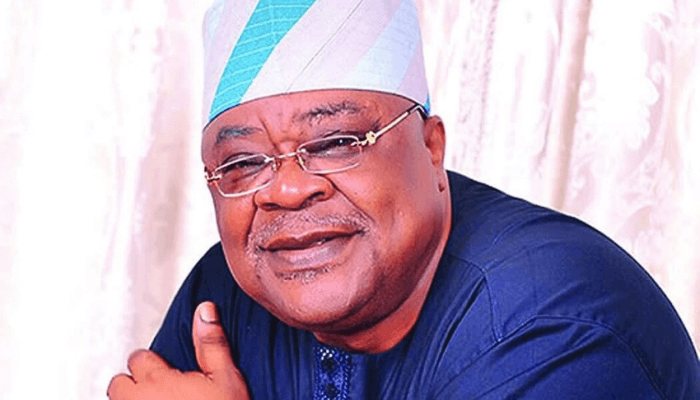
The family of the late former governor of Oyo State, Otunba Christopher Adebayo Alao-Akala, has been plunged into deeper crisis as his first daughter, Mrs. Oluwatoyin Alao-Aderinto, has approached the Oyo State High Court seeking a Deoxyribonucleic Acid (DNA) test on seven individuals claiming to be biological children of the deceased.
In a suit filed before Justice Taiwo of Court 12 at the State High Court, Ibadan, with Motion Number I/443/2024, Alao-Aderinto, through her counsel, Senior Advocate of Nigeria Oladipo Olasope, is asking the court to order DNA tests on herself and six others: Olamide, Adebukola, Olamipo, Olamiju (a current member of the House of Representatives), Tabitha, and Olamikunle. She further seeks an order for the exhumation of her father’s remains from his mausoleum in Ogbomoso for the purpose of conducting the paternity tests at a court-approved, accredited laboratory. The results, she prayed, should be submitted under seal to the presiding judge and only unsealed for pronouncement in open court.
This legal move follows ongoing disputes over the administration and distribution of the late governor’s vast estate, which includes properties in Ibadan, Lagos, Abuja, the UK, the US, a five-star hotel in Ghana, vehicles, and multiple bank accounts. The family feud became public in October 2022 when two individuals, Kemi Alao-Akala and Olamide Alabi, believed to be among the deceased’s daughters, obtained a Letter of Administration from the Oyo State Probate Registry without the knowledge or consent of Oluwatoyin, the first child.
Oluwatoyin contends that this act was a deliberate and unlawful exclusion, violating laws guiding intestate succession in Nigeria, and that there is no consensus on the paternity of the listed heirs. She argues that the inclusion of some and exclusion of others in the estate’s administration raises questions of authenticity and equity, prompting her to seek judicial intervention through scientific means.
The case underscores the growing reliance on DNA testing in Nigerian courts to resolve paternity and inheritance disputes, with courts empowered to order such tests in the interest of justice and fairness. The outcome of this high-profile case could set a precedent for similar family and estate disputes in Nigeria.