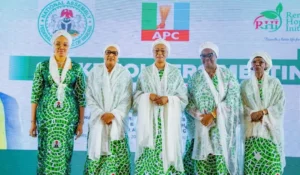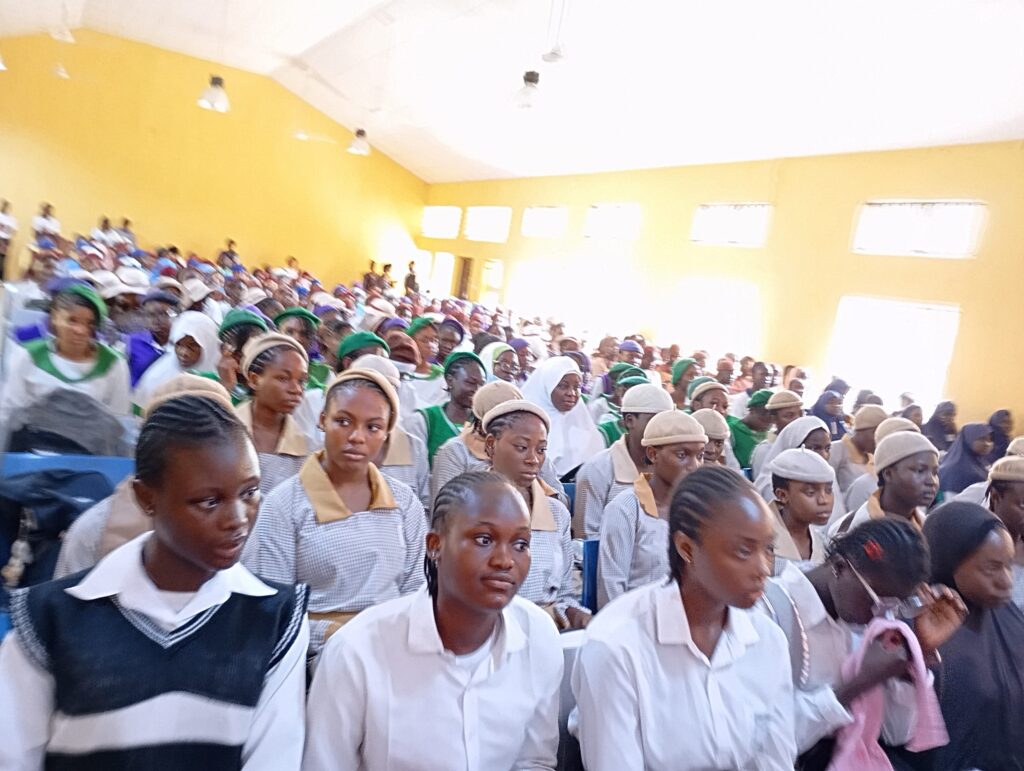
Girls from 16 government secondary schools in the Federal Capital Territory have presented technology projects addressing healthcare, digital safety and other community concerns. The work was showcased at the AI for Her event in Maitama, Abuja, on Wednesday, 28 October.
AfroTechXcel, which organised the programme, also submitted a memorandum to the National Information Technology Development Agency and the FCT Secondary Education Board. Its proposals cover teacher training, affordable access to technology, learning quality and child protection as schools introduce artificial intelligence.
Founder and executive director Emerald Akhaumere said more than 772 girls had joined the programme and developed more than 700 projects. Those totals were supplied by the organiser, alongside figures for learning activities and mentoring, rather than an independently published assessment of the projects.
The showcase took place at Model Secondary School, Maitama, where Akhaumere had been a pupil. She told participants that her experience of learning both technical and leadership skills at the school had influenced the programme she later established.
According to her account of the work, projects included AI classifiers, WhatsApp community bots and school registries. Others addressed menstrual and maternal health, consent and digital rights, or explored flood alerts and agricultural tracking. She said participants had tested solutions with users and prepared adoption plans.
Those activities form part of a progression from introductory lessons towards developing applications. The projects were presented as potential solutions; the event did not establish that every application had been deployed at scale or that its proposed social benefits had already been achieved.
The memorandum seeks to place teachers at the centre of AI education. Akhaumere said students should be able to show what they understand independently of an AI tool, while teachers need preparation to supervise how those tools are used.
“Teachers must be equipped to use AI to strengthen their teaching, not have their professional judgement replaced by a tool,” she said.
She described the document as a costed proposal supported by the programme’s experience in existing schools. The submission is a request for policy consideration, rather than evidence that NITDA or the education board has adopted its recommendations.
AfroTechXcel describes AI for Her: CultureCoded on its website as a school-based programme combining AI, coding and problem-solving with African cultural contexts. Its three stages, ROOT, RISE and RADIATE, move from identity and digital foundations to applied technical skills and community projects.
The organisation says it works in Secondary Education Board schools in Northern Nigeria. Its stated approach uses learners’ languages, stories and everyday circumstances as teaching material, rather than treating the social setting of a classroom as separate from technical education.
At Wednesday’s event, NITDA Director-General Kashifu Inuwa was represented by the agency’s Director of IT Infrastructure and Solutions, Oladejo Olawumi. The agency’s representative commended early technology education and the development of responses to local problems.
Akhaumere also outlined plans for learning hubs, beginning in Lugbe, with Mpape expected to follow. She said the organisation was working with partners on practical work and internship opportunities for girls and women completing its programmes.