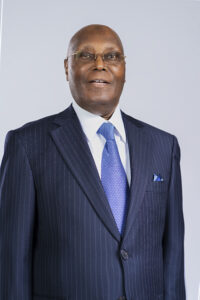
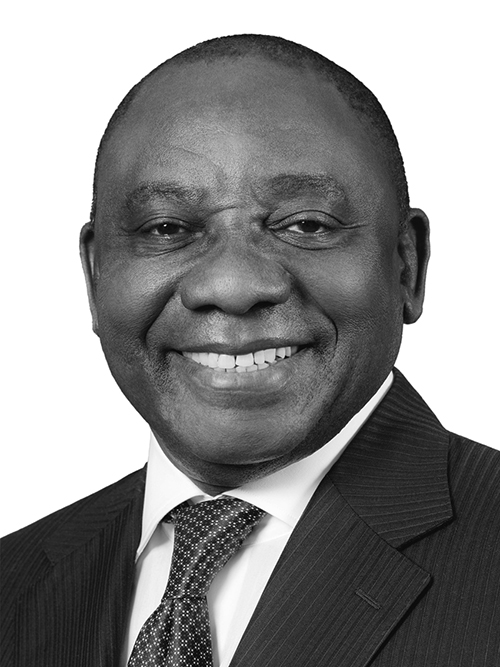
Official portrait of President Cyril Ramaphosa from The Presidency, Republic of South Africa. Archive portrait, not a photograph of the South Africa and the AI Opportunity Conference in San Jose on 18 November 2026. Source: The Presidency, South Africa. Reuse terms are not stated on the source page; publisher review required.
South African President Cyril Ramaphosa has set a 90-day benchmark for turning his government’s recent Silicon Valley engagements into artificial intelligence projects and formal partnerships, as ministers prepare to coordinate existing research programmes with proposals emerging from the visit.
Minister in the Presidency Khumbudzo Ntshavheni said on Thursday, 19 November, that government would bring existing AI initiatives together with new partnerships arising from Ramaphosa’s working visit to the United States. She said the outcomes would inform a review of South Africa’s Digital Transformation Roadmap and work on safeguards for the development and use of AI.
The target was outlined during the South Africa and the AI Opportunity Conference in San Jose on Wednesday, 18 November. Science, Technology and Innovation Minister Blade Nzimande said the government expected tangible projects to be under implementation and concrete partnerships to be formally concluded within 90 days. The benchmark is a target for follow-through, not evidence that those projects or agreements have already been secured.
Ntshavheni said proposals from the visit would be considered through the Inter-Ministerial Committee on Digital Transformation, which is responsible for implementing the national roadmap. Discussions are also continuing on whether South Africa needs guidelines or a broader policy framework for AI. She said guidelines would establish parameters for safe development and use while giving investors and innovators room to build new technologies.
The minister said South Africa was not starting from scratch. She pointed to an AI Institute launched in 2022 with the University of Johannesburg and Tshwane University of Technology, focused on the future of work, and to language-technology work at the University of Limpopo. Twenty-seven South African students, including master’s and doctoral researchers, were part of the delegation in Silicon Valley.
“You want to shape the technology, you don’t want the technology to shape you,” Ntshavheni said, describing the government’s aim of ensuring that local needs, languages and priorities influence AI development rather than leaving the country dependent on products designed elsewhere.
Ramaphosa framed the issue as both an economic and a developmental challenge. In his conference address, he said Africa, home to nearly one-fifth of the world’s population, accounted for only a tiny fraction of global data-centre capacity. Countries that control computing infrastructure, data, research and advanced technology, he argued, would hold significant advantages in the emerging economy, while countries that failed to build their own capabilities risked greater dependence on systems developed abroad.
The President called for South Africa to participate across the AI value chain, from minerals and materials used in advanced technology to electricity, data centres, telecommunications, research, software, model development and applications. He said the country should become a developer and producer of technology, not simply a consumer of imported systems.
That ambition depends on physical infrastructure as well as software and research. Ramaphosa identified reliable electricity, suitable land, water where required, data centres and connections to transmission networks as important considerations for investors. He called for a coordinated investment proposition that would bring approvals, electricity connections, land availability and infrastructure planning together, rather than leaving companies to navigate fragmented processes.
He said a large data centre could represent billions of rand in capital investment and create demand for construction, electrical engineering, cooling systems, transformers, switchgear, energy storage and specialist maintenance. However, he cautioned that building data centres alone would not deliver the employment and industrial development South Africa needs. Investment would have to support local suppliers, skills, research and new enterprises if it was to produce wider economic benefits.
Nzimande said the work would be anchored in South Africa’s Science, Technology and Innovation Decadal Plan for 2022 to 2032, which identifies AI as a foundational digital domain. He cited the Foundational Digital Capabilities Research Programme and the Centre for Artificial Intelligence Research as part of the country’s existing research base. Their work includes sovereign computing capabilities and research applications in precision agriculture, mining safety, digital health, public-service optimisation and local-language processing.
Skills development and safeguards are also part of the proposed approach. Nzimande said the government intended to expand AI, data-science and digital-skills pathways from schools to postgraduate research, with internships, learnerships and reskilling involving industry and universities. He identified women, young people and rural communities as groups requiring particular attention. Ramaphosa also warned that AI could displace workers, concentrate economic power and widen inequality if its benefits were not shared more broadly.
The President said responsible development would require transparency, accountability, fairness and protection of personal information. He called for stronger research institutions, access to computing facilities and partnerships that allow South African researchers to work with international scientists while developing intellectual property and businesses at home.
No investment amount, named commercial agreement or list of projects arising from the Silicon Valley visit was included in the government statements setting out the 90-day benchmark. The government is still considering the form of its AI guidelines or policy framework, and the Digital Transformation Roadmap is due for review. The next stage will therefore need to show which proposals have been selected, who is responsible for delivering them and how progress will be measured.
Ramaphosa said the success of the visit should be judged by the investments that follow, the partnerships established, the technologies developed, the enterprises created and the opportunities opened to South Africans. The 90-day benchmark gives the government a defined period in which to begin demonstrating those results.