The Itsekiri people of Warri Kingdom, Delta State, have called for the creation of a Warri State with its headquarters in Warri township, while firmly rejecting the Ijaw community’s demand for the establishment of Toru-Ebe State.
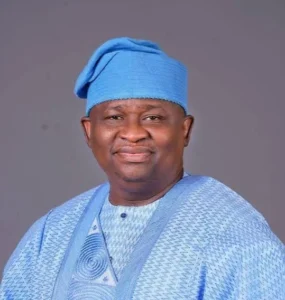
During the South-South Zonal Public Hearing on the review of the 1999 Constitution, held in Ikot Ekpene by the Senate Committee on Constitution Review, the Itsekiri delegation—led by Chief Edward Ekpoko, Tolureju of Warri Kingdom and Chairman of the Itsekiri Leaders of Thought (ILoT)—submitted a memorandum outlining their position.
The Itsekiri emphasized that their foremost demand is the inclusion of a minority protection clause in the constitution, similar to provisions in the defunct Midwestern Nigeria Constitution, to safeguard the interests of the Itsekiri and other ethnic minorities.
Supported by the Ilajes of Ondo State and the Binis of Edo, the Itsekiri opposed the Ijaw’s proposal for Toru-Ebe State, arguing that the Ijaws are considered tenants in the territories proposed for the new state.
The memorandum highlighted the Itsekiri’s limited political representation, noting they have no senator among the 109 in the National Assembly, only one seat in the 360-member Federal House of Representatives, and just two seats in the 29-member Delta State House of Assembly.
The Itsekiri argued that the push for new states is driven more by ethnic or sub-ethnic self-determination than by the need to correct inter-state or zonal imbalances, and that state creation alone will not address the root causes of agitation.
They advocated that ethnic and linguistic ties, rather than artificial state boundaries, should guide the formation of federating units. Contiguous ethnic or linguistic minorities could form a federating unit, provided constitutional safeguards are in place for each group.
The Itsekiri’s submission reflects ongoing debates about representation, resource control, and the structure of Nigeria’s federal system, highlighting the complexities of Nigeria’s diverse federation.