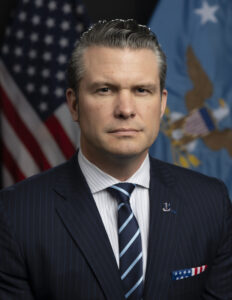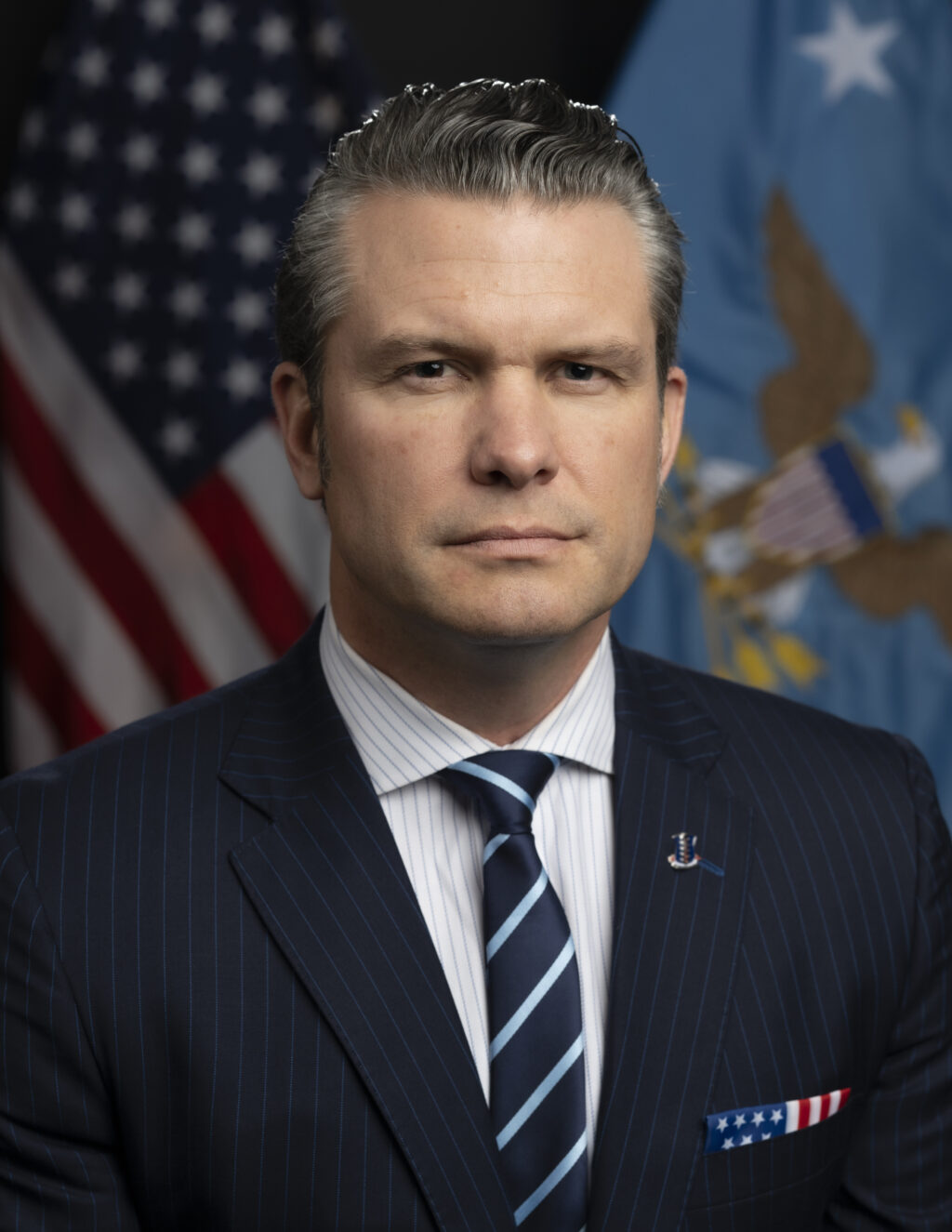
Archive portrait of Pete Hegseth, photographed on 27 January 2025 when he was serving as US Secretary of Defense. Photo by Chad J. McNeeley, Office of the Secretary of Defense Public Affairs. Public domain.
The United States and Venezuela have agreed to restore military cooperation, including joint training and intelligence sharing, US Secretary of War Pete Hegseth announced during a visit to Caracas on Wednesday, 18 November. The announcement followed talks with Venezuela’s interim president, Delcy Rodríguez, at the Miraflores presidential palace.
Hegseth said the arrangement would allow the two countries to work together against shared security threats, including drug-trafficking networks. Rodríguez said the agreement would support military training and help address common threats. The two governments have not published the text of the agreement or set out a timetable for its implementation.
A change in the relationship
The visit marks a significant change in the relationship between Washington and Caracas. Hegseth was making his first visit to Venezuela since American forces captured former president Nicolás Maduro in January 2026 and took him to the United States to face criminal charges. The operation removed Maduro from power but did not bring an immediate change of government led by the opposition. Rodríguez, who had served as vice-president, assumed the interim presidency. The trip had not been publicly announced by the Pentagon before Hegseth arrived. Venezuelan state television broadcast images of the meeting at Miraflores.
The agreement was described as re-establishing military ties. Public accounts of the announcement said it covers joint training, intelligence sharing and possible transfers of defence equipment. Hegseth also referred to expanded cooperation against drug-trafficking groups. Neither government has released the full terms.
Hegseth described Venezuela as a security partner rather than a regional threat, signalling a sharp shift in the language used by Washington since the January operation. At Miraflores, he said: “We look forward to following through, deepening our defense cooperation and our defense partnership.” He said the arrangement would draw on the expertise of the US military and the capabilities of Venezuela’s armed forces. Rodríguez said it would help improve training and strengthen the ability of the Venezuelan military to confront common threats.
Security cooperation and unanswered questions
The military agreement comes alongside a separate expansion of US involvement in Venezuela’s oil sector. A US-backed company has secured long-term access to 17 oilfields under a separate arrangement and plans to raise output above 250,000 barrels per day by the end of the year. The energy relationship has become a central part of Washington’s dealings with the interim authorities, although the military announcement was not presented as part of the oil agreement. The two arrangements have not been described by either government as a single package.
The announcement also fits into a wider US regional campaign against organised trafficking. In March, the US Department of War published a joint security declaration signed by several governments at an Americas Counter Cartel Conference, setting out plans for bilateral and multilateral cooperation on border security, trafficking and critical infrastructure. Venezuela was not among the listed signatories.
The agreement was announced against the background of US operations targeting suspected drug-smuggling vessels in the Caribbean and eastern Pacific. Public reporting has recorded at least 240 people killed in those operations since September 2025. Reports have also noted that publicly available evidence supporting some US allegations against the targeted vessels has been limited. The announcement did not explain whether the new cooperation would involve joint operations, intelligence support for US strikes, or a different form of assistance.
That distinction is important because the public statements did not identify the legal framework, command arrangements, oversight procedures or rules governing any joint activity. Nor did they specify how information would be shared, which units would take part in training, or whether equipment transfers had been approved. The agreement’s practical scope therefore remains unclear.
Political transition remains unresolved
Venezuela’s political transition also remains unresolved. Rodríguez continues to lead the interim administration following Maduro’s capture, but the two governments have not announced a date for a new presidential election. The military announcement did not include a timetable for an electoral process or explain how security cooperation would relate to the country’s political future.
For Washington, the agreement extends a rapid expansion of engagement with the Venezuelan authorities after years of hostility. For Rodríguez’s government, it offers a route to renewed military training and cooperation with a country whose forces carried out the operation that removed Maduro. The shift has taken place while the United States has also pursued access to Venezuelan energy resources.
The announcement establishes a new direction for military relations, but not yet a transparent account of how the partnership will work. Until the agreement’s terms and implementation arrangements are made public, its reach, safeguards and consequences for Venezuela’s security institutions remain undetermined.