President Bola Tinubu has defended his administration’s external borrowing strategy, saying infrastructure investment is necessary to expand Nigeria’s economy, while organised labour has demanded an explanation for further loans despite government claims of increased revenue.
In an essay circulated by the Presidency, Tinubu said borrowing should be assessed against the assets and economic value it produces. He argued that Nigeria’s ambition to build a $1 trillion economy by 2030 required sustained investment in infrastructure, productivity, industrialisation and trade.
The President identified major highways, electricity grid improvements and the modernisation of commercial ports in Lagos among the investments intended to strengthen productive capacity. Healthcare, education and vocational training also formed part of the programme he described.
He said the government wanted longer-term financing arrangements that matched the lifespan of infrastructure assets. According to him, this approach would reduce refinancing pressures and support projects capable of generating economic returns.
The essay also outlined priorities including food affordability, energy price stability, fiscal discipline, completion of major projects and targeted household support. Tinubu said the administration’s performance should ultimately be measured through completed infrastructure, investment, employment and living standards.
The intervention follows his request to the National Assembly for approval of a supplementary external borrowing programme covering 2026 and 2027. The proposed facilities comprise approximately $20.52 billion and €1.05 billion.
In his letter to lawmakers, Tinubu said the money would support infrastructure, agriculture, healthcare, education, water supply, security, employment generation and financial management reforms. He described external financing as a means of bridging the gap between Nigeria’s infrastructure requirements and available resources.
The submission is a request for legislative authorisation. It should not be treated as confirmation that the entire proposed sum has been borrowed, disbursed or spent on completed projects. The financing programme requires National Assembly approval before the government can proceed.
Nigeria Labour Congress President Joe Ajaero questioned the justification for additional borrowing during an appearance on Channels Television’s The Morning Brief. He asked why the government continued seeking foreign loans while saying petrol subsidy removal had increased the funds available to federal and state governments.
Ajaero also raised the implications of higher international oil prices for government income. His argument was that improved earnings should prompt a clearer explanation of the need for additional debt.
The labour leader acknowledged that the NLC did not possess the authority to approve or reject government borrowing. He nevertheless called for greater accountability from the institutions responsible for scrutinising the proposals.
Tinubu, meanwhile, acknowledged continuing pressure on public finances. Channels Television reported his statement that debt servicing accounted for about 65 per cent of revenue in the first half of 2026.
The President said securing finance was only the beginning of the process. The test, he maintained, would be whether projects were completed, delivered value for money and improved Nigerians’ lives. His defence sets out the government’s intended outcomes, rather than evidence that those results have already been achieved.
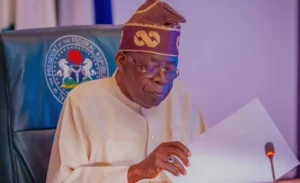
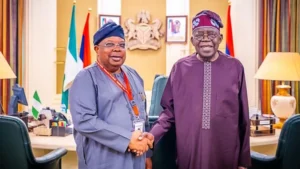
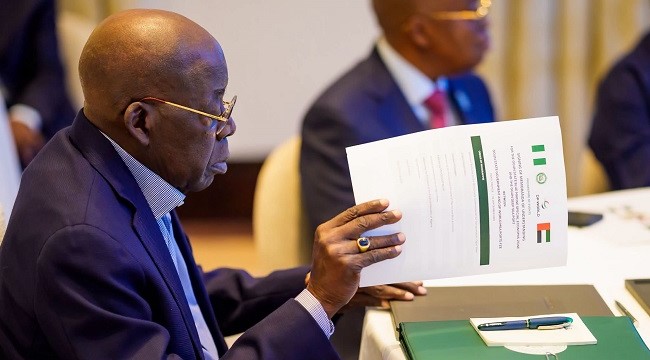
Image: archive photograph via Channels Television, credited X/@aonanuga1956. Photograph date unstated.