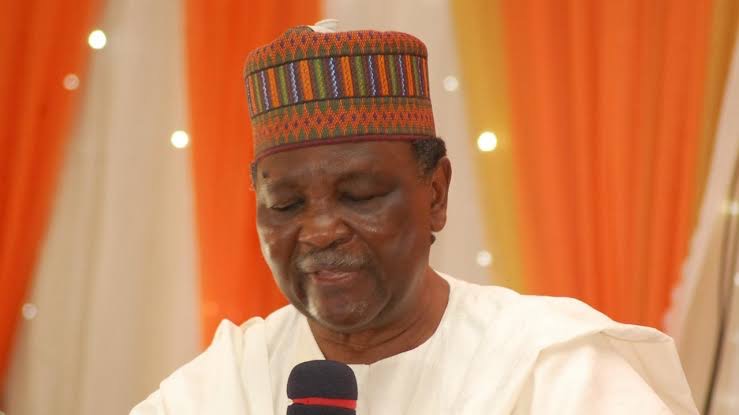
Former member of the Enugu State House of Assembly and ex-South-East spokesman for President Bola Tinubu, Denge Onoh, has urged former Head of State Gen. Yakubu Gowon to apologise to the Igbo people over remarks he made on civilian casualties during the Nigerian Civil War.
Onoh said Gowon’s comments, made during an interview on Arise Television, downplayed the human cost of the conflict. The former military ruler had recounted visiting former Biafran territories after the war and noticing black marks on palm trees, which he was told were bullet impacts. Gowon reportedly concluded that “most of the bullets fired by the Nigerian army hit palm trees, not people.”
In a statement issued on Sunday, Onoh described the remarks as a “dangerous minimisation” of the tragedy of the 1967–1970 war. He argued that the claim contradicted established historical records, eyewitness accounts, and international reports on the conflict.
“The war resulted in an estimated three million deaths, largely from starvation, disease linked to the federal blockade, and direct combat operations,” Onoh said. “Reducing these horrors to bullets harmlessly striking palm trees does not withstand basic scrutiny. It ignores the well-documented humanitarian crisis, including widespread kwashiorkor among children, mass displacement, and the devastating human cost of prolonged fighting across the South-East.”
Onoh also questioned Gowon’s portrayal of the war in his autobiography My Life of Duty and Allegiance, saying it reinforced a defensive narrative that presented the conflict as a “police action” while downplaying civilian suffering. While acknowledging Gowon’s post-war policy of “No Victor, No Vanquished” and the 3Rs programme of Reconciliation, Rehabilitation and Reconstruction, Onoh maintained that genuine healing required honest acknowledgment of the pain endured by victims.
“In light of this, General Gowon owes the Igbo people a simple, sincere apology for the suffering endured during the war,” he stated. “Not that this simple act means everything, but it means a lot. Such an apology will be remembered as the act of a true statesman and a genuine step toward healing and reconciliation.”