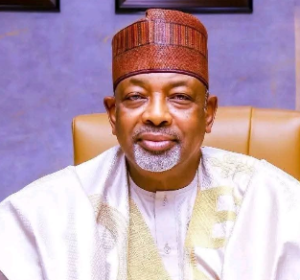
Former presidential aide and public commentator Reno Omokri has defended former Nigerian Head of State, General Abdulsalami Abubakar, arguing that the decision of Nigerian leaders to seek specialised medical treatment abroad should not automatically be interpreted as evidence of failure in the country’s healthcare system.
In a social media post that has generated fresh discussion about the strengths and weaknesses of Nigerian healthcare, Omokri pointed to what he described as a growing trend of reverse medical tourism, where patients from developed countries travel to Nigeria for specialist treatment.
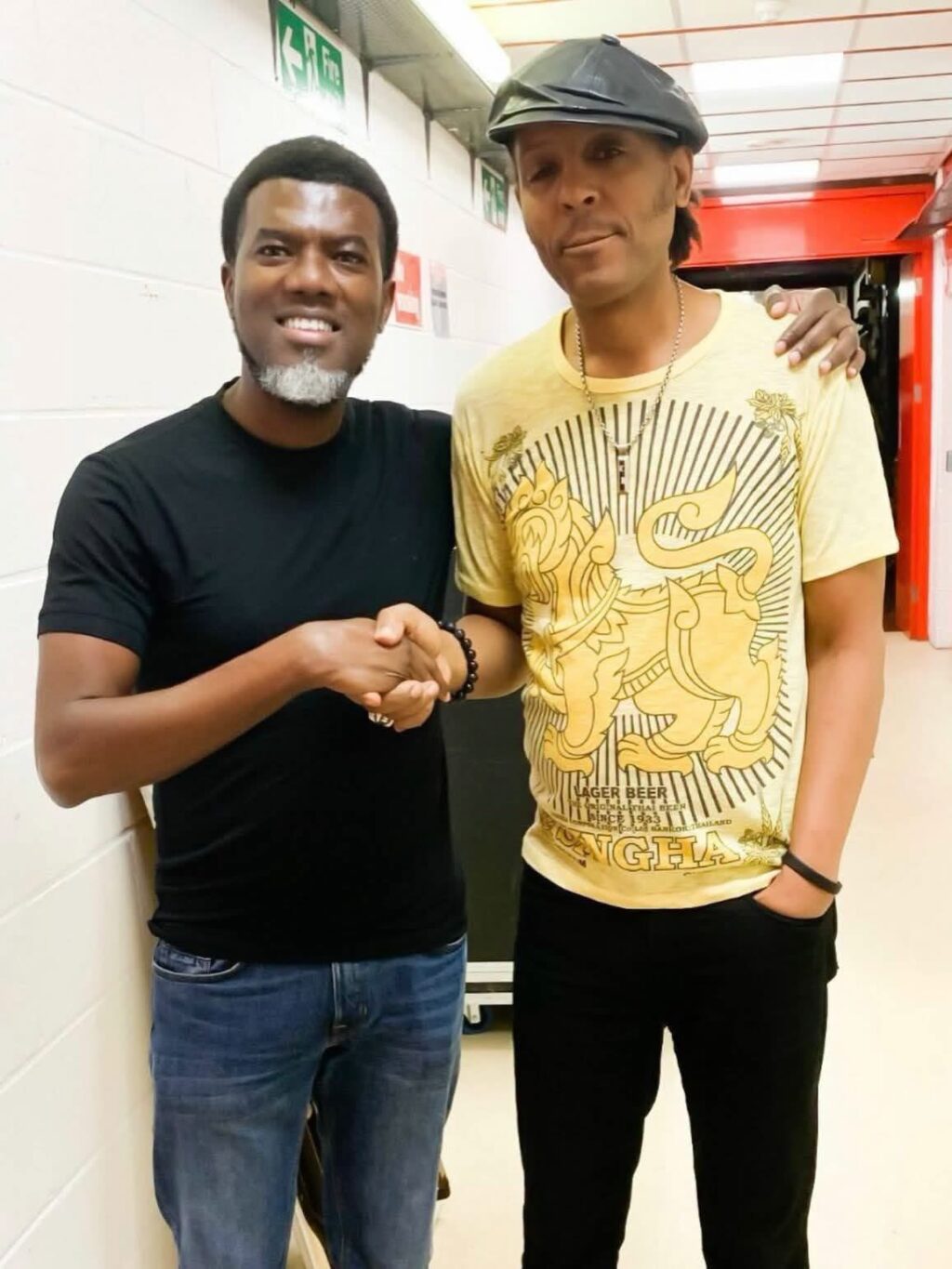
Central to his argument was the experience of American singer, dancer and choreographer Jeffrey Daniel, a founding member of the celebrated R&B and soul group Shalamar.
According to Omokri, Daniel, whom he described as a personal friend, had suffered an illness that caused considerable anxiety after seeking treatment in both the United States and United Kingdom.
Omokri said Daniel later travelled to Nigeria and presented himself at the National Hospital in Abuja, where doctors carried out tests and placed him on a course of treatment that eventually restored his health.
“Mr Daniel, a friend of mine, personally told me of his experience after he performed at a concert in Reading, England,” Omokri said.
The account has not been independently confirmed by the National Hospital or through publicly available medical records, meaning it remains a personal testimony relayed by Omokri. Daniel, however, has had a longstanding relationship with Nigeria and has in recent years spoken publicly about his decision to live in the country.
Omokri’s broader argument about foreigners travelling to Nigeria for healthcare has stronger official backing.
In February 2025, Vice President Kashim Shettima said Nigeria was witnessing an increase in reverse medical tourism, particularly in kidney care. During a meeting with the Nigerian Association of Nephrology at the Presidential Villa, Shettima said 13 patients from the United States had travelled to Nigeria for kidney transplants at Zenith Medical and Kidney Centre.
He attributed their decision to lower costs and the specialist expertise available in the country.
“There is reverse medical tourism these days fundamentally because of the level of care at some of our hospitals,” Shettima said.
Reports of patients travelling into Nigeria for treatment are not limited to kidney care.
Former CNN journalist Isha Sesay publicly revealed that her mother had been taken from Sierra Leone to Lagoon Hospital in Lagos after becoming seriously ill. Sesay said her mother spent three months in intensive care and publicly thanked Nigerian doctors and nurses for saving her life.
“I am thankful there were medical options in Nigeria for my mother because I had none available in Sierra Leone,” she said at the time.
Some private healthcare providers have also reported treating patients travelling from the United Kingdom, United States and neighbouring African countries. However, Nigeria does not currently operate a centralised registry capable of establishing precisely what proportion of patients at private hospitals are international medical tourists.
Recent reporting has suggested that some specialist private facilities in Lagos, Abuja and Port Harcourt receive a noticeable share of patients from outside Nigeria, but the absence of comprehensive national data means claims that 15 per cent of all private hospital patients are foreigners should be treated cautiously.
Omokri also referred to former Sierra Leonean President Ernest Bai Koroma, who travelled to Nigeria after a Sierra Leonean court authorised him to leave the country on medical grounds. His stay in Nigeria later became linked to wider legal and diplomatic developments involving Sierra Leone, Nigeria and ECOWAS.
Omokri linked the debate directly to General Abdulsalami Abubakar because the National Hospital Abuja was commissioned during his administration.
The hospital, originally established as the National Hospital for Women and Children, was commissioned in May 1999, shortly before Abubakar’s military administration handed power to the elected government of President Olusegun Obasanjo. Its mandate was later expanded and it became known as the National Hospital Abuja.
Omokri argued that medical travel must therefore be considered within the context of specialist expertise rather than used as a simple measure of whether a country’s entire health system has succeeded or failed.
Nigeria continues to face serious healthcare challenges, including the migration of health workers, affordability problems, uneven access to specialist treatment and pressure on public hospitals. At the same time, a growing number of specialist centres are developing capabilities that are attracting patients from beyond the country’s borders.
That contrast is central to the debate.
Reverse medical tourism does not by itself mean Nigeria’s healthcare problems have been solved. Neither does every Nigerian travelling abroad for a specialised procedure prove that the country’s health system has nothing to offer.
For Omokri, the examples of Jeffrey Daniel, international kidney transplant patients and other foreign patients demonstrate that Nigerian medicine possesses areas of expertise that deserve greater recognition.
His conclusion was unequivocal: “General Abubakar did not fail Nigeria, and Nigeria did not fail him.”
The wider question for policymakers is whether isolated centres of medical excellence can be transformed into a healthcare system that delivers the same quality, affordability and confidence to ordinary Nigerians at home.
Podium News will continue to examine developments in Nigeria’s healthcare sector, including the growth of specialist medicine, medical tourism and the challenge of making high-quality care accessible to more Nigerians.