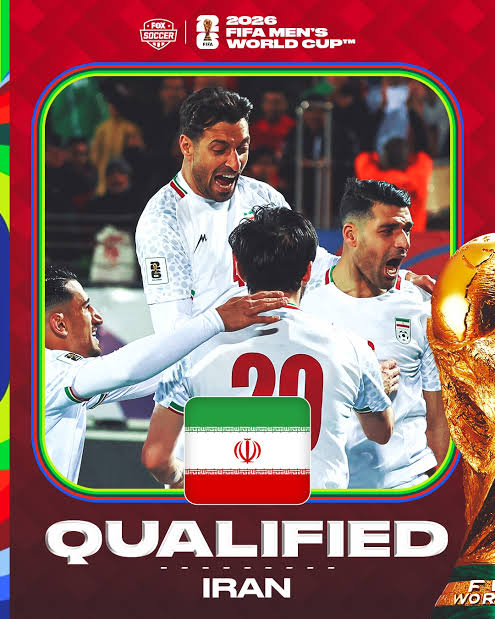
Iran’s qualification for the 2026 FIFA World Cup—set to be hosted across the United States, Canada, and Mexico—comes at a time of heightened political tension with the United States. While the two countries are not officially at war, their relationship remains hostile, defined by years of sanctions, cyber warfare, and geopolitical stand-offs. Against this backdrop, Iran’s presence on American soil for one of the world’s biggest sporting events introduces a complex mix of diplomacy, security, and symbolism.
Football as Soft Diplomacy
International sports have long served as a form of indirect diplomacy, offering countries a stage to engage with each other away from the confines of formal negotiations. In previous World Cup meetings between the U.S. and Iran, such as the iconic 1998 and 2022 fixtures, the world witnessed moments of mutual respect despite political divides. Should the two nations meet again in 2026, the game could become another opportunity for symbolic dialogue—where a handshake or jersey exchange might say more than months of political posturing.
Heightened Security and Sensitive Logistics
Iran’s participation will require meticulous planning from U.S. authorities. Beyond the standard security measures, organizers will need to address the potential for politically charged protests, cyber threats, or disruptions targeting Iranian players or fans. The Federal Bureau of Investigation (FBI), Department of Homeland Security, and local agencies will likely be involved in ensuring safety and compliance with FIFA regulations, while also managing public sentiment and diplomatic optics.
The Political Stage Within the Stadium
Matches involving Iran—especially against Western nations—often attract political expression from both supporters and detractors. From human rights banners to chants highlighting ongoing tensions, the atmosphere could extend beyond sport. FIFA typically discourages political messaging, but enforcement is uneven, and in a host nation with free speech protections, it’s likely that political overtones will surface—both in and outside the stadiums.
Visa and Diplomatic Challenges
One practical concern is ensuring that Iran’s delegation—including players, coaching staff, and officials—can enter the United States without undue hindrance. In the current political climate, visa processes may face complications, even though FIFA expects host countries to guarantee access to all qualified teams. Iran’s fanbase may also encounter travel challenges, raising broader concerns about inclusivity and fair treatment under tournament regulations.
A Test of Unity or a Mirror of Discord
Iran’s presence in the 2026 tournament could serve as a powerful reminder of sport’s ability to bring people together across deep divides. With the right approach, the World Cup can offer moments of shared humanity and peace-building. However, it also risks becoming a flashpoint for tension if either side uses the platform to escalate political narratives.
Conclusion
Iran’s qualification adds more than just competitive depth to the 2026 World Cup—it adds complexity. For the United States, it presents a challenge: to uphold the spirit of the game while navigating geopolitical sensitivities. The decisions made in the lead-up to and during the tournament will reflect not only on FIFA’s commitment to neutrality but also on America’s ability to host the world, even when the world brings its deepest divisions with it.