A Durban murder inquiry has opened after a crowd of about 50 people killed a foreign national in the South African city on Thursday, 22 October. The victim’s nationality and the motive for the attack have not been established publicly.
KwaZulu-Natal police spokesperson Colonel Robert Netshiunda said a group had been marching along Dr Pixley kaSeme Street towards Maud Mfusi Street. Two men allegedly broke away and approached the victim, who was standing beside the road.
The man was then assaulted by a larger group and declared dead at the scene, police said. They believe he was in his late 30s or early 40s and are working to identify suspects. His name had not been released.
Netshiunda told the BBC that police could not speculate about the motive and would release further information once verified. Authorities have not identified the victim as Nigerian or linked a named organisation to responsibility for the killing.
The attack comes amid months of anti-immigrant demonstrations, including recent violence in Durban and Gauteng. Police had not established what Thursday’s march was about in their initial account, AFP reported. That uncertainty remains separate from the wider pattern of hostility towards migrants.
GroundUp journalists Joseph Bracken and Tsoanelo Sefoloko reported that almost every shop near the scene remained closed during the day amid fears of further violence. Their report places the killing in a commercial area already affected by repeated confrontations over immigration.
Earlier this month, the same reporters documented harassment outside Durban’s Home Affairs Refugee Reception Centre. On 6 October, a group carrying sticks entered a parking area where asylum seekers were queuing, pushed people and told them to leave. Police subsequently moved the group outside.
One woman waiting for documents told GroundUp that repeated visits to the office reduced the time she could spend running her salon. She described supporting her family while paying rent and struggling to obtain assistance without proper documentation.
The earlier incident involved people seeking access to the asylum process. It has not been linked by investigators to Thursday’s murder, and none of those described in that report has been identified as the victim or a suspect in the killing.
At a national security briefing reported by the government news service SAnews on 11 October, police said 30 people had been arrested over public violence and unlawful protests. Twenty-five arrests were in KwaZulu-Natal and five in Gauteng.
Deputy National Commissioner Lieutenant General Tebello Mosikili said investigations covered burning vehicles, attacks on businesses and homes, looting and other offences. The arrests followed unrest connected to claims about a Constitutional Court ruling on asylum applications.
Mosikili said additional resources had been deployed and that the South African National Defence Force had been activated in KwaZulu-Natal to support police. She described the protection of lives, property and essential services as the security operation’s priorities.
“Our priority remains the protection of life and property,” Mosikili said at the briefing.
Those arrests concerned the earlier unrest. The new murder investigation centres on Thursday’s fatal assault in Durban’s central business district.
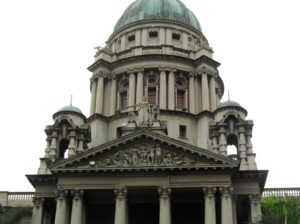
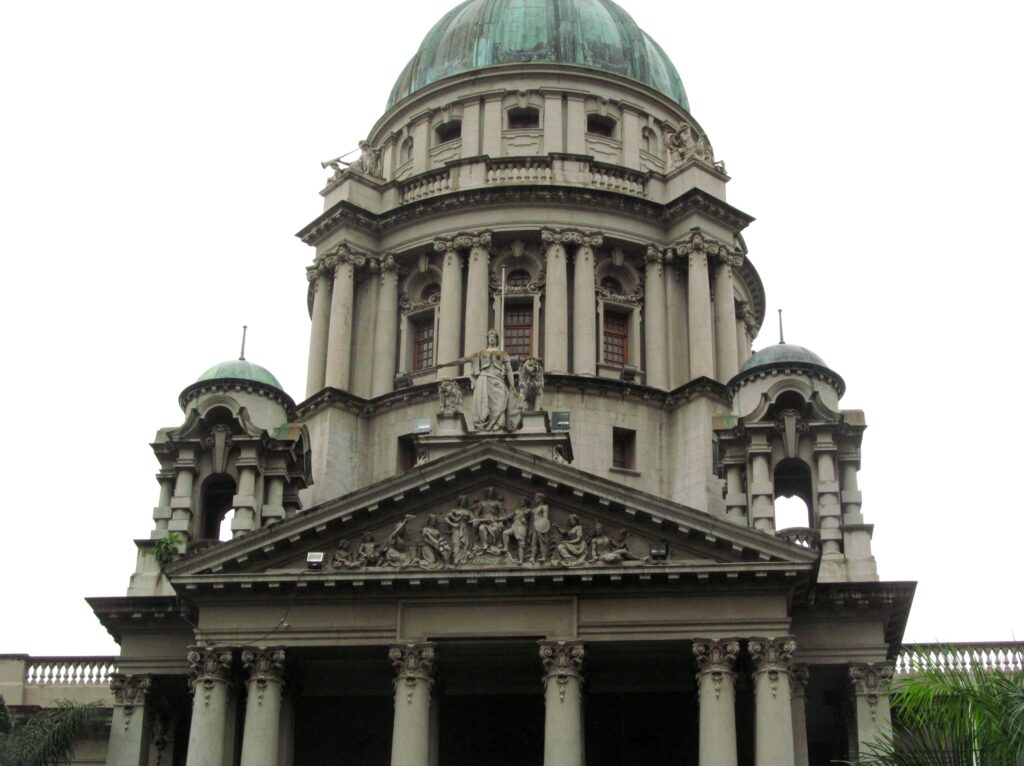
Illustrative archive photograph: Durban City Hall, 30 January 2014, by Khethukuthula Happyson Mbonambi. Rotation and light adjustments by JMK. CC BY-SA 4.0. This is not the attack scene or a photograph of Thursday’s march. Image source; licence.