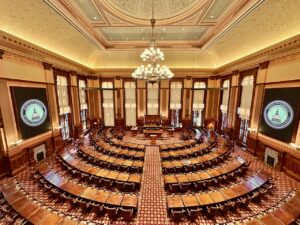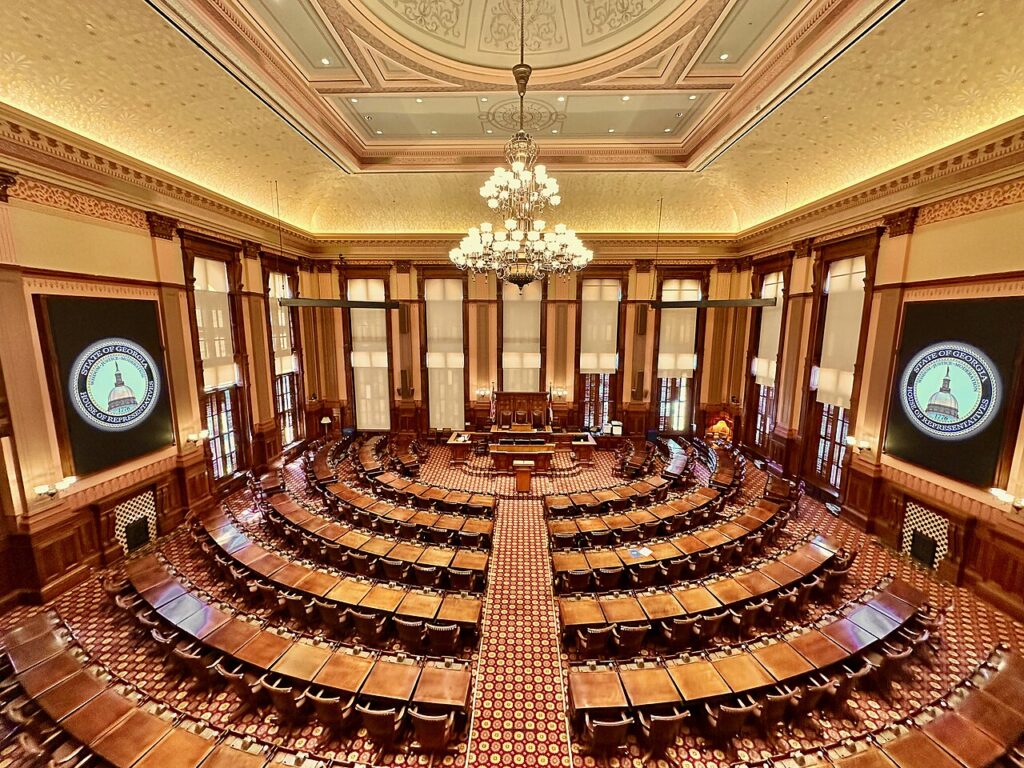
Democrats have won control of the Georgia House of Representatives for the first time in about two decades, adding another state legislative chamber to their gains in the United States midterm elections held on 3 November 2026.
The Associated Press called enough contests on Monday, 9 November, to give Democrats 91 seats in the 180-member chamber, against 86 for Republicans, with three races still unresolved. The 91 confirmed seats are sufficient for a majority, regardless of how the outstanding contests are decided.
The result ends Republican control of the Georgia House and follows a Democratic victory in the state’s governorship election. Republicans, however, retained the Georgia Senate, meaning the party will still be able to block legislation requiring approval from both chambers. The election outcome does not give Democrats complete control of Georgia’s state government.
Georgia’s result forms part of a much wider shift in state legislatures. According to the Associated Press, Democrats have gained control of at least 12 legislative chambers across the country, the largest single-election gain by either party since Republicans captured 20 chambers in 2010.
The party’s advances extend beyond the congressional elections, in which Democrats secured control of the United States House of Representatives and Senate. State legislative results matter independently because elected lawmakers determine budgets and write laws governing schools, healthcare, taxation, transport and other services that directly affect residents.
The balance of power also shapes decisions on major economic projects. State legislatures can influence the rules and incentives applying to data centres, energy infrastructure and business investment. Their decisions may affect the cost and availability of electricity, local employment and public spending, although the practical effects of the new majorities will depend on legislation subsequently proposed and enacted.
Democratic gains in Arizona, Michigan, Minnesota, Nevada, Pennsylvania and Wisconsin are expected to give the party control of both legislative chambers and the governorship in those states once newly elected officials take office. That arrangement, commonly described as unified state government, can make it easier for a governing party to advance its programme, although individual lawmakers may still oppose particular measures.
Across the country, Democrats are expected to hold at least 28 governorships, 24 state Senates and 27 state lower chambers after the transition to the new terms, according to the Associated Press tally. Those figures reflect election calls and expected control, rather than the completion of every certification process.
Several outcomes remain unsettled. In North Carolina, the final Senate contest could determine whether Republicans retain a narrow majority or Democrats reach a tie that would be decided by the Democratic lieutenant governor. Legislative control in Alaska also remains unresolved.
The Georgia result illustrates why the 2026 midterms cannot be assessed solely through Washington. Control of Congress will determine the balance between the presidency and federal lawmakers, but governors and state legislators will make separate decisions affecting public services, economic regulation and the administration of state programmes.
For Nigerian and other African diaspora communities living in the United States, those state decisions can have practical consequences through education funding, business conditions, healthcare provision and other local policies. No particular change to those services follows automatically from the election result: any effects will depend on the measures the incoming lawmakers pursue.
The outstanding Georgia contests will determine the final size of the Democratic majority, but not whether the party controls the House. The state Senate remains Republican-controlled, leaving Georgia with divided legislative leadership as the next session approaches.
Image: Georgia House of Representatives chamber, photographed in May 2023. Harrison Keely / Wikimedia Commons, CC BY 4.0. https://commons.wikimedia.org/wiki/File:The_Georgia_House_of_Representatives_inside_the_capitol_building.jpg