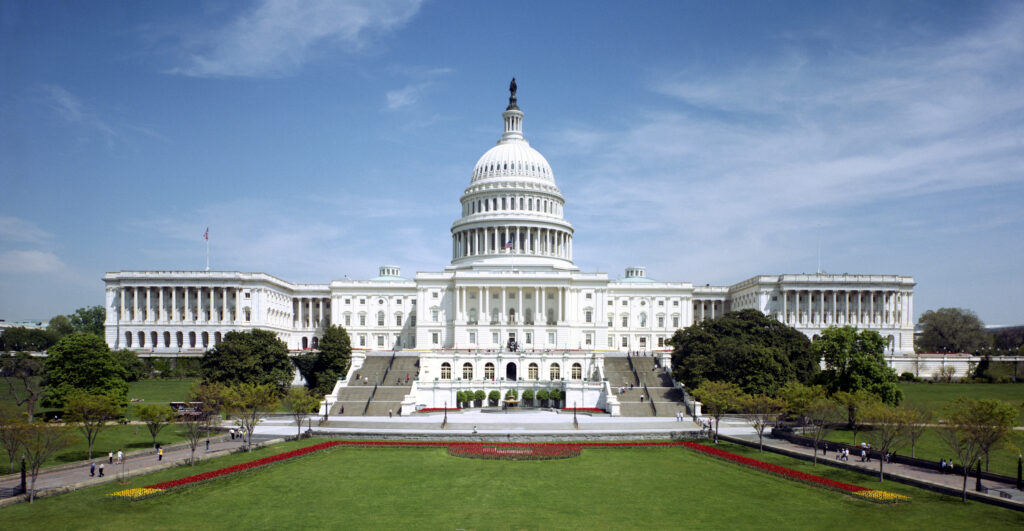
The US Senate has rejected a resolution directing President Donald Trump to remove American forces from hostilities with Iran, voting 48 in favour and 51 against in the first major Senate test of support for the conflict since the November midterm elections.
The measure, House Concurrent Resolution 93, was recorded as not adopted in the Senate’s official floor log on Thursday. It had already passed the House of Representatives in September, but the Senate’s decision means the proposed congressional direction will not be adopted.
Three Republicans, Susan Collins of Maine, Lisa Murkowski of Alaska and Rand Paul of Kentucky, joined Democrats in supporting the resolution. Democratic Senator John Fetterman of Pennsylvania voted against it. The vote was largely along party lines, with most Republicans backing the administration’s position.
H.Con.Res.93 invoked Section 5(c) of the 1973 War Powers Resolution. It directed the President to remove US armed forces from hostilities against Iran unless Congress declared war or passed a specific authorisation for the use of military force.
The text included an exception for forces considered necessary to defend the United States, an ally or a partner from an imminent attack. Any such defensive use would still have been subject to the reporting requirements in Section 5(b) of the War Powers Resolution.
A test after the midterm elections
The Senate vote came after Republicans suffered sweeping losses in the November 3 midterm elections, with Democrats set to take control of both chambers when the new Congress convenes in January. Republicans nevertheless retain control of the current Senate until the end of the 119th Congress.
The vote was the first major Senate decision on the Iran conflict since the election. Democrats have repeatedly used war powers resolutions to challenge the President’s authority to continue military action without a specific congressional authorisation. They have argued that the conflict has become a significant public and economic concern, particularly because of its effect on fuel prices.
Senator Tim Kaine of Virginia, who has led several of the efforts, said before Thursday’s vote: “The American public is tired of it.” He also pointed to rising gasoline and diesel prices and other costs that he said had punished American households since the war began.
Republicans opposing the resolution argued that the votes were distracting from the military campaign and could weaken the United States’ ability to protect itself and its partners. Senator Tim Sheehy of Montana urged the country to “finish the job, protect this nation and protect our allies”.
The division was not entirely uniform. Collins, Murkowski and Paul supported the resolution, while Fetterman voted against it. The result showed that the midterm outcome had not immediately changed the balance of votes in the current Senate, even as it altered which party will control Congress in January.
What the resolution would have done
The House approved H.Con.Res.93 on September 15 by 220 votes to 204. Seven Republicans joined 213 Democrats in voting for it, while 203 Republicans and one independent voted against. The House Clerk’s record confirms that the resolution was passed and sent to the Senate, where it was referred to the Foreign Relations Committee the following day.
The measure was a concurrent resolution, not an ordinary bill to be sent to the President for signature. Its purpose was to direct the removal of US forces from hostilities with Iran under the War Powers Resolution, while preserving the stated exception for defence against an imminent attack. The proposal did not itself provide a new funding package, establish a timetable for negotiations or set out a diplomatic settlement.
The 1973 War Powers Resolution was enacted after the Vietnam War amid concern about the extent of presidential authority to commit American forces overseas. It requires the President to notify Congress within 48 hours when US forces are introduced into hostilities or situations where hostilities are imminent. It also sets a 60-day period for military action without congressional authorisation, subject to the law’s provisions and a possible 30-day extension for withdrawal.
The application and constitutional effect of the law have been disputed by successive administrations and members of Congress. Supporters of Thursday’s resolution said Congress should exercise its constitutional responsibility over decisions involving war. The Trump administration and Republican supporters have questioned whether a concurrent resolution can lawfully constrain the President without being presented for a veto. Democrats dispute that position.
The Senate’s rejection does not settle that wider dispute. It means only that H.Con.Res.93 was not adopted and that the Senate did not approve the direction contained in the measure.
War remains a political and economic issue
The US-Israeli war against Iran began on February 28 and has remained a central issue in Washington. The conflict featured prominently in the midterm campaign, with voters expressing concern about military action and its effect on household costs.
An Associated Press voter survey conducted among more than 100,000 voters found that about six in ten believed the United States had made the wrong decision in taking military action against Iran. Most of those who held that view supported Democratic candidates in their local House races.
Democratic leaders have said they will continue pressing for an end to the conflict and for Congress to reassert its role in decisions about military action. Republicans have maintained that the administration should be allowed to pursue its objectives and protect American personnel and allies.
The failed vote leaves the two sides divided over both the conduct of the war and the constitutional limits on presidential authority. Democrats will have greater control of the legislative agenda when the new Congress begins in January, but Thursday’s result shows that the current Senate has not agreed to the withdrawal direction set out in H.Con.Res.93.