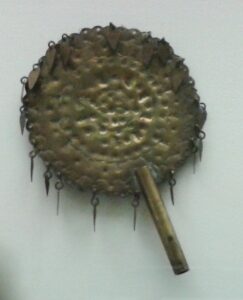
Yoruba royal shoes dating from 1900 to 1920 will go on view in Toronto when the Bata Shoe Museum opens its new beadwork exhibition on 22 October. The footwear forms part of regalia traditionally used to proclaim an Oba’s status.
Brilliant: The Art of Beaded Footwear Around the World is scheduled to continue until April 2028. The museum has assembled more than 85 objects spanning over four centuries, largely from its own international collection, with some acquisitions being displayed for the first time.
The Yoruba shoes carry several layers of symbolism. According to the museum’s interpretation, beaded faces honour Odùduwà, the ancestral Oba of the Yoruba. Interlaced patterns represent connections between the divine and the living, while birds signify female power.
The museum presents the footwear alongside objects from Africa, Europe, South Asia, Turtle Island, or North America, and Western Asia. Its exhibition examines the time and skill involved in applying beads by hand, as well as the identities and beliefs communicated through their arrangement.
Elizabeth Semmelhack, the museum’s director and senior curator, said people had used beadwork to express status and belonging across different cultures. She described the exhibition as an invitation to consider the makers and traditions behind the finished footwear.
“Brilliant celebrates the remarkable artistry of these works,” she said in the museum’s announcement. The exhibition is curated by Semmelhack, the museum’s curator and exhibitions manager Nishi Bassi, and Justine Woods, an assistant professor at Parsons School of Design.
A further African connection appears in footwear made through Mimi Plange’s collaboration with Manolo Blahnik for her 2012 Spring/Summer collection, A Flower in a Desert. The museum links the design to Plange’s research into Herero women’s dress in Namibia and beadwork traditions elsewhere in Africa.
Other displays include Peranakan bridal mules, probably from the 1920s, and footwear by a Nêhiyawak ancestor artist dated to about 1875. Six Indigenous community consultants contributed knowledge and perspectives to the exhibition’s interpretation of Indigenous material culture.
British studio Mila Textiles made a pair of beaded Vans especially for the exhibition, adding a contemporary commission to the historical footwear.
A public opening celebration is scheduled for Sunday 25 October, from noon to 4pm, with family activities and guided visits. Exhibition tours are listed for 12.30pm, 1.30pm, 2.30pm and 3.30pm, each lasting approximately half an hour.
Artist Marissa Magneson will lead a presentation about beads at 1pm. Drop-in crafts will run through the afternoon, with children required to attend with an adult. The museum says activities depend on available supplies and the schedule may change.
General admission is free for everyone on Sundays. Regular adult entry costs C$16 and includes the galleries and special exhibitions. The museum is at 327 Bloor Street West, close to St. George subway station, and normally opens from 10am to 5pm Monday to Saturday and noon to 5pm on Sundays.
Visitors requiring lift access should check arrangements before travelling. The museum’s current notice says its main passenger lift is out of service, with Visitor Services able to arrange an alternative. Advance tickets are recommended but are not compulsory.
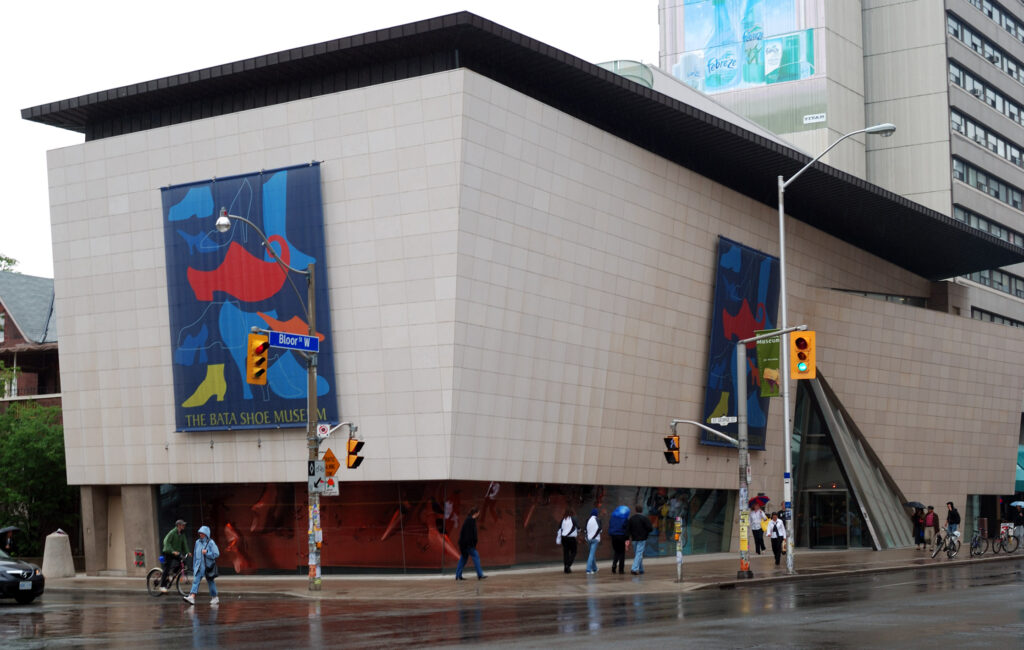
Archive venue photograph: Eberhard J. Wormer, Bata Shoe Museum, Toronto, June 2008. Wikimedia Commons, CC BY-SA 3.0. It does not show the new exhibition or its objects. Website image retained; landscape and social versions cropped and resized under the same licence. Image source; licence.