The Federal Government has unveiled 39 agricultural curricula and 31 national occupational standards. Under the new model, tertiary institutions are expected to devote 80 per cent of agricultural training to practical work and 20 per cent to theory.
Education Minister Tunji Alausa presented the programmes on Monday at the Universal Basic Education Commission Digital Resource Centre in Abuja. The package covers agricultural courses offered by polytechnics, colleges of agriculture and colleges of education. It applies at National Diploma, Higher National Diploma and Nigeria Certificate in Education levels.
According to the Federal Ministry of Education, the 39 curricula consist of 32 reviewed programmes and seven newly developed ones. They include emerging areas such as precision agriculture, climate-smart farming, artificial insemination, agricultural entrepreneurship and modern production technologies.
The occupational standards set out the competencies expected in particular areas of agricultural work. Their introduction alongside the curricula is intended to connect classroom instruction more closely with the skills required by farms, processing businesses and other employers across the agricultural value chain.
Alausa said Nigeria needed skilled farmers, technicians, teachers and entrepreneurs capable of applying modern technology, responding to climate change and building productive agricultural businesses.
“Our responsibility as a government is to ensure that education and training offered in institutions prepare our students to meet these demands,” the minister said.
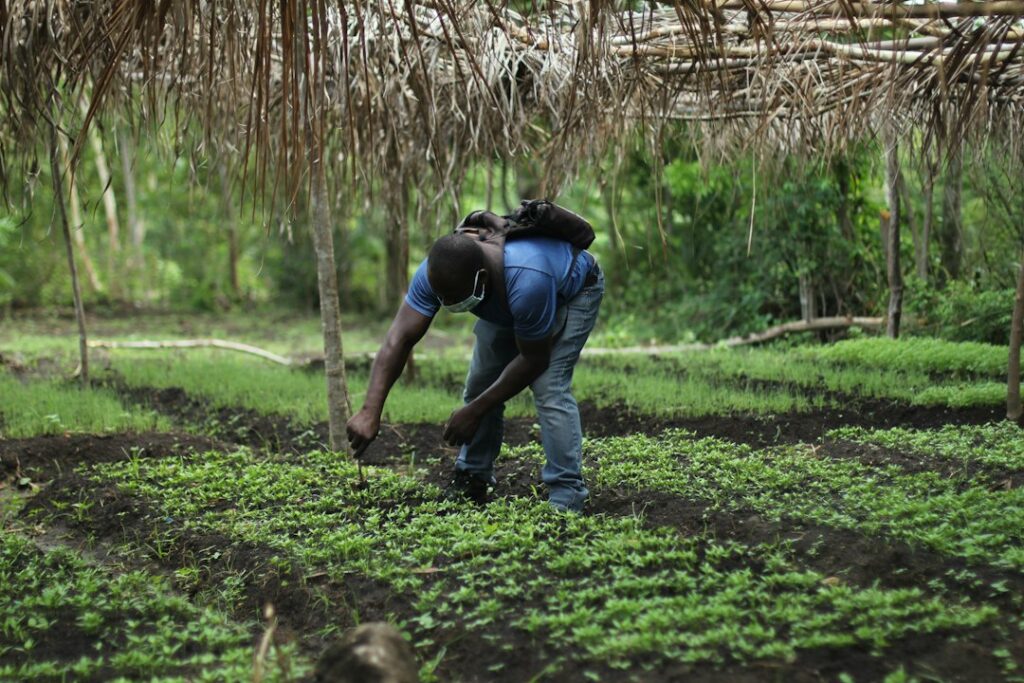
Institutions are expected to expand hands-on learning through teaching farms, greenhouses, processing facilities and agricultural technology hubs. The minister also urged them to establish partnerships with working farms and agricultural companies so that students can gain experience with current production methods and equipment.
The unveiling marks a further stage in a process that began in 2025. The Federal Ministries of Education, Agriculture and Food Security, and Livestock Development worked with regulators, tertiary institutions, curriculum specialists and industry representatives on the review. The National Commission for Colleges of Education participated in developing standards for teacher-training programmes.
The government had signalled the shift in August, when Alausa received the implementation committee’s report and announced plans to replace the previous model of 70 per cent theory and 30 per cent practical training. Monday’s event moved that proposal to the formal unveiling of the curricula and occupational standards.
Implementation will now depend on regulatory agencies aligning accreditation, assessment, teaching and monitoring with the revised requirements. Colleges will also need appropriate land, laboratories, workshops, equipment, instructors and links with commercial operators if the practical share is to be delivered as designed.
Alausa acknowledged those constraints, saying adequate funding, modern equipment and qualified instructors were essential. He said the reform should ultimately be judged by the competencies graduates acquire, the jobs and businesses they create and any improvement in agricultural productivity.
The Executive Secretary of the National Board for Technical Education also called for an agricultural trust fund or an extension of Tertiary Education Trust Fund interventions to colleges of agriculture. He said many institutions lacked the laboratories, workshops and other facilities needed to implement the new programmes effectively.
The funding question is central to the difference between publishing a curriculum and changing students’ daily training. An institution cannot allocate four-fifths of instruction to practical work solely by rewriting timetables if it lacks functioning farms, tools, livestock facilities, laboratories or access to external workplaces.
The Minister of Livestock Development, Idi Maiha, said the revised programmes should help develop personnel for animal production, breeding, health, processing and marketing. He urged public agencies, training institutions, private companies and development partners to support implementation.
The reform arrives as Nigeria continues to confront food-price pressure, youth unemployment and gaps between tertiary qualifications and workplace skills. Agricultural colleges and polytechnics are expected to prepare graduates for farming, agro-processing, extension services, equipment operation, livestock production and agribusiness, but the effectiveness of the new model will vary according to institutional capacity.
The National Board for Technical Education regulates technical and vocational institutions, including polytechnics, specialised institutions and colleges of agriculture. Its accreditation work will be significant in determining whether schools demonstrate the facilities and partnerships required for the 80:20 model.
The government’s announcement does not establish that every affected institution already has the resources to begin full implementation. It sets the required direction and provides the revised programme documents, while leaving regulators and institutions responsible for translating them into teaching, assessment and supervised practical experience.
The next measurable stage will be the adoption of the curricula by individual institutions, the readiness of their practical facilities and the performance of the first students trained under the new standards.