At least 139 migrants, including children, have died after an overcrowded boat carrying 305 people capsized off Djibouti while travelling towards Yemen, according to the International Organization for Migration.
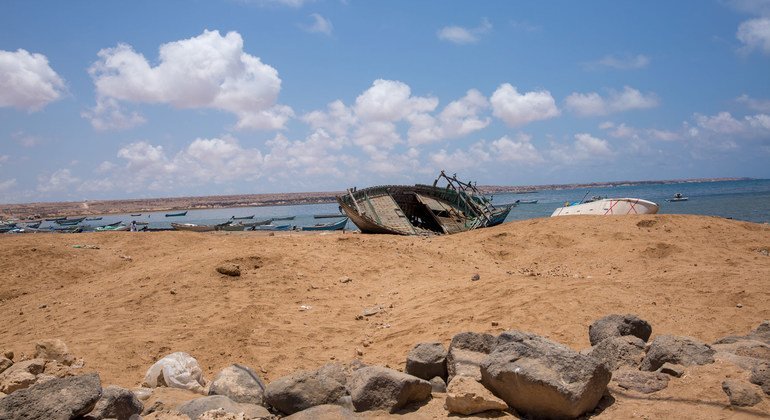
The vessel went down near Guhere, north of the port town of Obock, during the night of 8 to 9 October 2026. The UN migration agency said 82 people survived and at least 84 remained missing as search and rescue operations continued.
All the known survivors were Ethiopian nationals. Many were taken to the IOM’s Migrant Response Centre in Obock for medical attention and psychological support after swallowing seawater and witnessing the deaths of relatives and fellow passengers.
The confirmed toll includes only bodies recorded by Djiboutian authorities. Other victims were reportedly buried by migrants themselves and cannot be added to the official count until the authorities verify them, meaning the final number of deaths may rise.
A journey that ended close to shore
The migrants boarded the boat on the evening of 8 October. Alexandre Coissac, the IOM’s Chief of Mission in Djibouti, said the vessel sank soon after departure and close to shore, with overcrowding identified as the main cause.
Local authorities faced an overwhelming emergency as bodies washed towards the beach. Survivors were left in shock, while some were given access to telephones so they could tell families at home that they were alive.
“This is a devastating loss of life,” Coissac said. He described the disaster as another reminder of the dangers migrants face while seeking economic opportunities along the corridor.
The boat was heading across the Bab el-Mandeb Strait towards Yemen. Many migrants who take this route hope eventually to find work in Saudi Arabia or other Gulf countries. Their journey commonly begins in Ethiopia or Somalia, continues through Djibouti and then crosses one of the world’s busiest and most dangerous waterways.
The dangers of the Eastern Route
The passage from the Horn of Africa to the Arabian Peninsula is known as the Eastern Route. It exposes migrants to overloaded and unseaworthy boats, dangerous seas, exploitation by smugglers, trafficking, detention, violence, hunger and dehydration.
More than 900 people died or went missing along the route in 2025, according to the IOM’s Missing Migrants Project. The number of people attempting the journey rose by 18 per cent that year, despite repeated warnings and continuing instability in Yemen.
The journey also runs in both directions. While migrants from the Horn of Africa continue travelling towards Yemen in search of work, escalating conflict in Yemen has forced thousands of people to flee towards Djibouti. This produces a grim two-way movement across the same stretch of water, driven by insecurity and the absence of safe alternatives.
Economic hardship remains a major factor. Recent IOM interviews with Ethiopian migrants in Djibouti found that some had left because of difficult living conditions and drought. Others reported fleeing conflict or forced recruitment by armed groups.
Renewed fighting in northern Ethiopia has added urgency to the region’s displacement crisis. The latest shipwreck therefore cannot be understood only as a maritime accident. It reflects a wider system in which poverty, war, environmental pressure and limited legal migration routes push people towards smugglers and unsafe transport.
The human cost behind the figures
Each number represents a person whose family may struggle to learn what happened. Some of the dead were buried without being identified, raising the possibility that relatives will wait indefinitely for news.
IOM Director-General Amy Pope urged governments and donors to expand safe and legal migration pathways. Her warning addresses the central problem exposed by the disaster: people continue to board dangerous boats when the risks of staying appear greater than the risks of leaving.
Search operations and emergency assistance remain the immediate priorities. Djiboutian authorities are providing medical care, arranging burials and working with IOM teams to support survivors. The missing must still be located, while survivors need longer-term psychological care and help reconnecting with their families.
The tragedy also demands stronger regional action against smugglers who profit from desperation. Enforcement alone, however, will not stop the crossings if the forces driving migration remain unchanged. Measures to protect livelihoods, reduce conflict, provide reliable information and open lawful routes are essential to reducing the market for dangerous journeys.
For governments across the Horn of Africa and the Gulf, the Djibouti disaster is a test of whether repeated shipwrecks will continue to be treated as isolated emergencies. The scale of the loss, and the prospect that more victims remain uncounted, require a response that reaches beyond rescue operations to the conditions that put 305 people on an overcrowded boat in the first place.
Readers with relatives who may have travelled through Obock should use official IOM and government channels for verified information and avoid sharing unconfirmed casualty lists or images of victims.