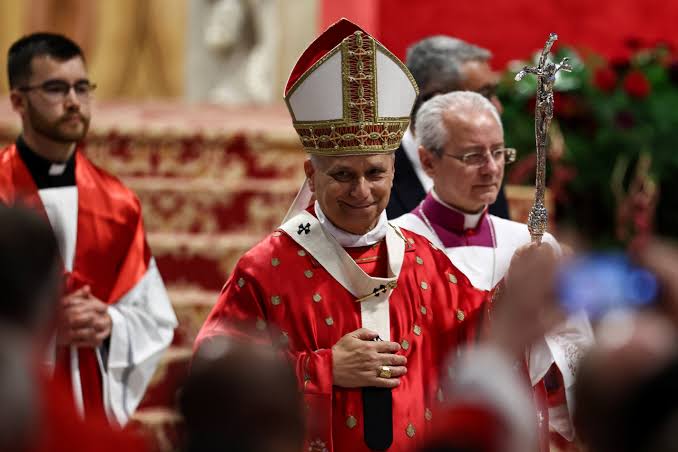
Pope Leo XIV on Monday issued an unprecedented apology for the Vatican’s role in justifying slavery, describing the Church’s delay in condemning the practice as “a wound in Christian memory.”
In his first encyclical, titled Magnifica Humanitas (Magnificent Humanity), the pontiff acknowledged that Church institutions owned slaves until the Middle Ages and that the Apostolic See of Rome had, in the early modern period, intervened to regulate and legitimize forms of subjugation, including the enslavement of “infidels.”
“It was only in the 19th century that a formal, absolute and universal condemnation of slavery was clearly articulated,” Pope Leo wrote. “For this, in the name of the Church, I sincerely ask for pardon.”
The 43,000-word document focused on the ethical challenges posed by artificial intelligence and the digital economy, but linked those concerns to historical injustices. Pope Leo warned of “new forms of slavery” emerging through digital labor and the extraction of rare earth minerals, calling the fight against modern exploitation a “decisive test” for the Church’s moral discernment.
While previous popes, including John Paul II and Pope Francis, had apologized for the involvement of Christians in the slave trade and condemned contemporary forms of slavery, Pope Leo’s statement went further by explicitly acknowledging the Vatican’s direct role in legitimizing the practice.
“It is true that past events cannot be judged anachronistically, as though the moral criteria that matured over time had always been available,” he said. “Yet neither can we deny or diminish the delay with which both society and the Church came to denounce the scourge of slavery.”