
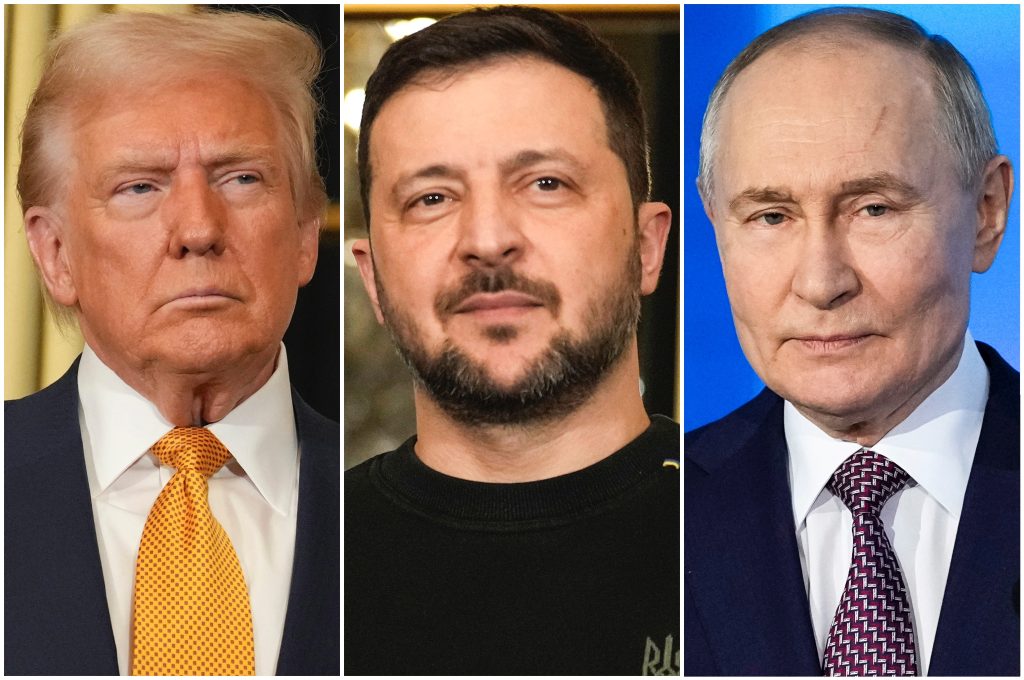
President Volodymyr Zelensky has delivered a firm rejection of a new peace proposal reportedly put forward by the United States, declaring that Ukraine will not cede any of its sovereign territory to Russia.
In a public address, Zelensky categorically stated that any plan requiring territorial concessions would be a reward for aggression and a violation of international law.
The proposed plan, details of which have circulated in diplomatic circles, is said to involve a ceasefire along the current front lines, followed by negotiations that could potentially freeze the conflict with Russia remaining in control of occupied Ukrainian regions. This framework is viewed by Kyiv as an attempt to force Ukraine into accepting the results of the Russian invasion without restoring its full territorial integrity.
Zelensky emphasized that Ukraine’s foundational position for any peace negotiations remains unchanged: the full restoration of its 1991 internationally recognized borders, which includes the liberation of Crimea and all territories in the Donbas region currently held by Russian forces. He argued that accepting anything less would legitimize the use of military force to redraw borders in Europe, setting a dangerous global precedent.
The Ukrainian leader expressed gratitude for continued American military and financial support but made a clear distinction between aid and what he sees as unacceptable diplomatic pressure to compromise on core principles of sovereignty. He framed the struggle not merely as a Ukrainian concern but as a defense of the entire rules-based international order.
This public rejection signals a significant rift between Kyiv and Washington regarding the strategic endgame of the war. While the U.S. has been Ukraine’s most critical ally, there appears to be growing pressure from some quarters to seek an off-ramp to a conflict with no clear military resolution in sight, concerns over prolonged expenditure, and fears of further global escalation.
Zelensky’s defiant stance underscores the immense political and moral challenge at the heart of any potential peace process. It highlights the fundamental clash between the pursuit of a stable, if imperfect, ceasefire and the uncompromising demand for justice and the reversal of an act of conquest.
The statement ensures that diplomatic efforts, if they are to succeed, must find a formula that bridges this seemingly unbridgeable gap.