
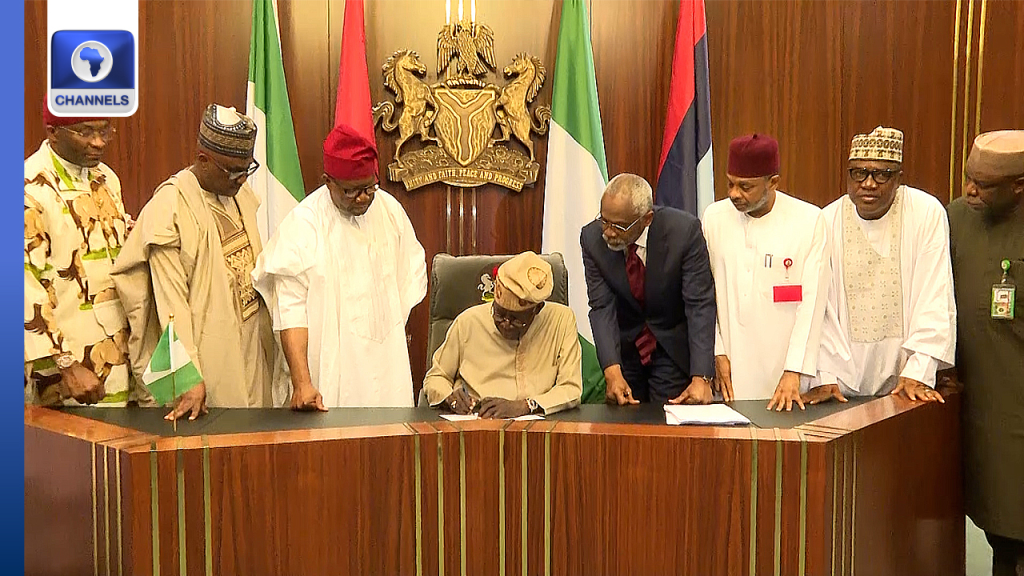
President Bola Tinubu has signed the Electoral Act, 2022 (Repeal and Re-Enactment) Bill 2026 into law following its passage by the National Assembly after months of deliberations. The signing took place on Wednesday at the State House in Abuja in the presence of principal officers of the Senate and House of Representatives, marking a major update to Nigeria’s electoral legal framework ahead of the 2027 general elections.
The amended Electoral Act has reignited debate across the country, particularly over provisions on the electronic transmission of election results.
While the law formally recognises the use of electronic results transmission systems like the IReV portal, it also retains manual methods when technology fails — a compromise that has drawn both support and criticism from different political and civil society groups.
As part of the changes, the National Assembly also adjusted the election notice period, reducing it to avoid scheduling national polls during periods like Ramadan, according to lawmakers.
Supporters of the new law, including political leaders, say the reforms reflect the aspirations of Nigerians and are aimed at strengthening democratic processes, while critics argue that key issues affecting transparency and credibility still need to be addressed.