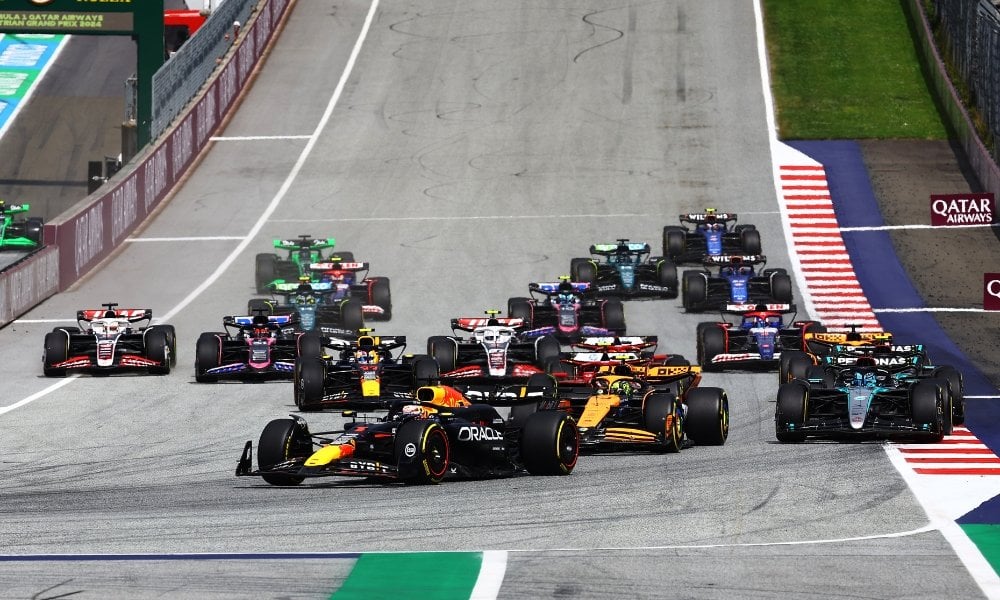
Nigeria has formally entered the race to become the first African country in over three decades to host a Formula 1 Grand Prix, with Abuja proposed as the venue.
The National Sports Commission (NSC), led by Chairman Mallam Shehu Dikko, announced the official submission of the bid to Formula 1 authorities.
Opus Racing Promotions has been appointed as Nigeria’s official representative to conduct negotiations and finalize the arrangements to bring the global motorsport spectacle to the country.
The NSC has extended invitations to key figures in the F1 world—Formula 1 CEO Stefano Domenicali, seven-time World Champion Lewis Hamilton, and Tilke Engineers & Architects, the renowned designers of many F1 circuits—to visit Abuja and engage with government and private sector stakeholders.
Mallam Dikko emphasized that the bid extends beyond sports, aiming to drive tourism, infrastructure development, youth engagement, and economic growth. He noted Nigeria’s position as Africa’s largest economy, with considerable infrastructure and a dynamic private sector, making it uniquely poised to meet the demanding logistical and organizational standards of Formula 1.
This initiative aligns with President Bola Ahmed Tinubu’s Renewed Hope Initiative for Nigeria’s Sports Economy (RHINSE), which seeks to reset and refocus the nation’s sports sector to attract foreign investment, increase exports, and boost the country’s GDP.
If successful, Nigeria will host the first African F1 race since South Africa’s last Grand Prix in 1993, marking a major milestone for motorsport on the continent.
The planned circuit in Abuja is expected to be a state-of-the-art facility with a proposed investment of around $500 million, combining modern track design, safety features, and spectator amenities.
Nigeria faces competition from other African candidates including South Africa and Rwanda, both reportedly pursuing bids to host the event.
Nevertheless, Nigeria’s bid signals strong ambition to leverage Formula 1 as a catalyst for transforming the nation’s sports economy and boosting its international profile.
The targeted timeframe for hosting the event is around 2028, pending approval from Formula 1 authorities and completion of all necessary infrastructure and regulatory requirements.
In summary, Nigeria’s bid to host a Formula 1 Grand Prix in Abuja represents a bold step toward revitalizing African motorsport, promoting economic development, and placing Nigeria prominently on the global sporting map.