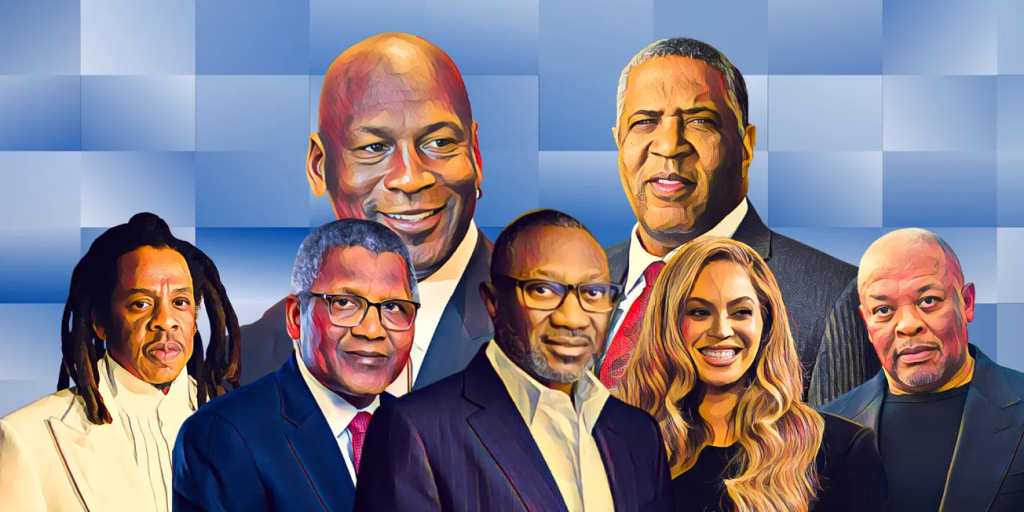
The number of Black billionaires globally remains extremely small compared to the overall billionaire population, highlighting the persistent gap in wealth distribution despite growing representation across industries.
Nigerian industrialist Aliko Dangote continues to rank as the richest Black person in the world, maintaining his dominance through his cement, sugar, and oil businesses. His wealth remains significantly higher than any other Black billionaire globally.
Other prominent African billionaires include Mike Adenuga, Abdulsamad Rabiu, and South Africa’s Patrice Motsepe, all of whom have built fortunes across telecommunications, cement, and mining. These individuals continue to anchor Africa’s presence on the global wealth list.
In the United States, several Black billionaires dominate sectors such as private equity, technology, and media. Notable figures include Robert F. Smith and David Steward, whose investments and enterprise ventures place them among the wealthiest Black individuals worldwide.
The entertainment and sports industries have also produced a growing number of Black billionaires. Oprah Winfrey, Michael Jordan, Jay-Z, Rihanna, Tyler Perry, and LeBron James have all built billion-dollar empires through a combination of talent, branding, and business expansion.
In 2026, new entrants further expanded this list, particularly in the entertainment space. Beyoncé and Dr Dre joined the billionaire ranks, marking a significant moment for music industry wealth and influence.
Beyoncé’s fortune is largely driven by her music catalog, global tours, and business ventures, while Dr Dre’s wealth stems from his pioneering role in music production and the success of Beats Electronics, which was sold to Apple in a multibillion-dollar deal.
Despite these additions, Black billionaires still represent less than one percent of the global billionaire population. Their wealth is concentrated across a few sectors, including natural resources, finance, media, and entertainment.