More than 7,000 languages are spoken across the world today, but linguistic diversity is under growing threat, with at least 3,000 languages, representing about 40 percent of all living languages, classified as endangered due to declining usage and failure to pass them on to younger generations.
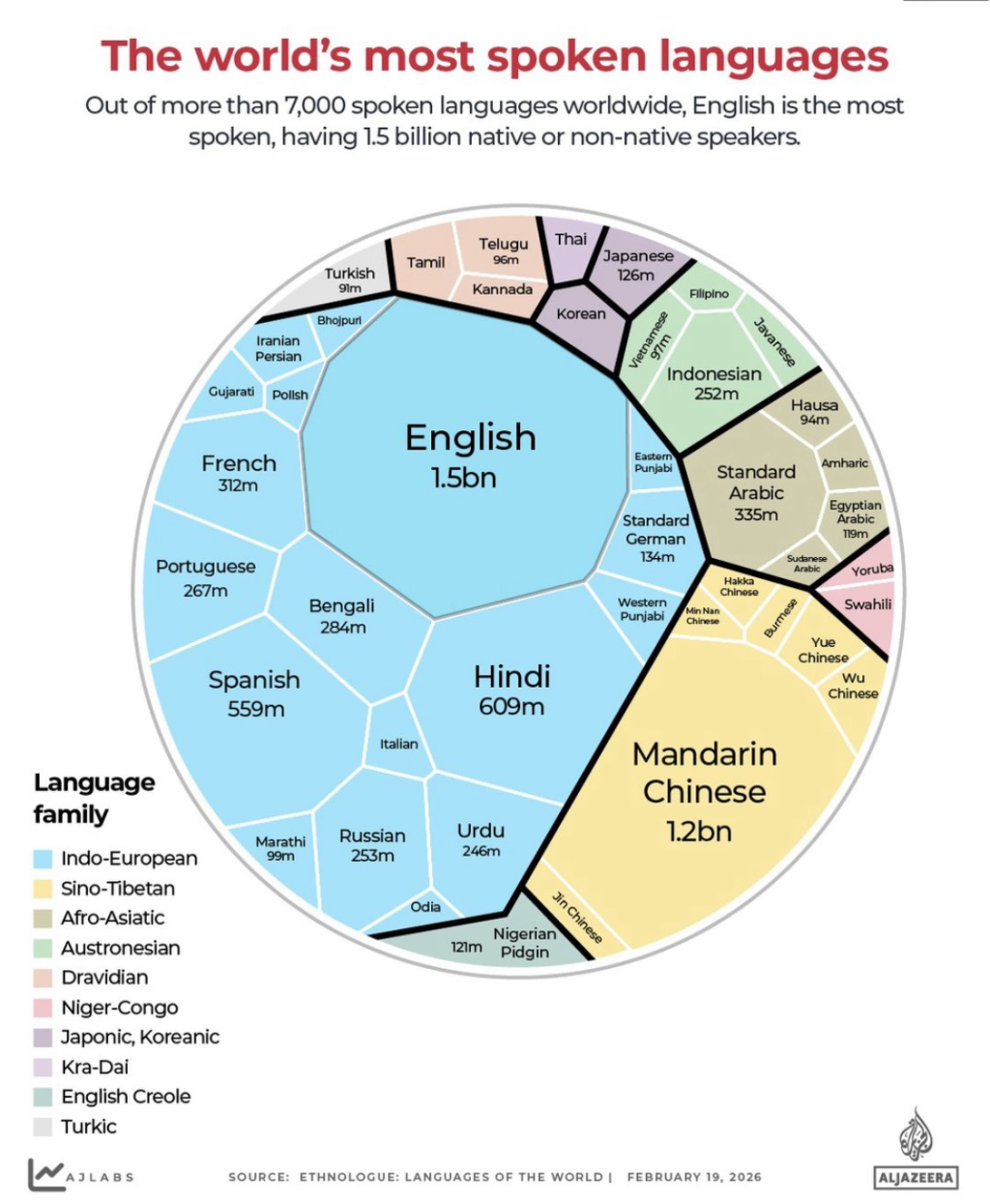
English remains the most widely spoken language globally, with an estimated 1.5 billion speakers spread across 186 countries. Only about two out of every ten English speakers are native users, while the vast majority speak it as a second, third, or additional language, reflecting its role as a dominant global lingua franca.
Mandarin Chinese ranks second with nearly 1.2 billion speakers worldwide. However, when only native speakers are considered, it is the largest language in the world, largely because of China’s massive population and the language’s central role in daily communication across the country.
Hindi occupies third position with about 609 million speakers, followed by Spanish with approximately 559 million speakers, and Standard Arabic with around 335 million speakers, underscoring the strong presence of these languages across multiple regions and continents.
African languages are also gaining recognition on global rankings, with Hausa, Yoruba, and Nigerian Pidgin listed among the world’s most spoken languages. Their inclusion reflects not only large native-speaking populations within Nigeria and West Africa, but also widespread usage across borders, urban centres, media, trade, and diaspora communities, highlighting Nigeria’s significant linguistic footprint on the global stage.