
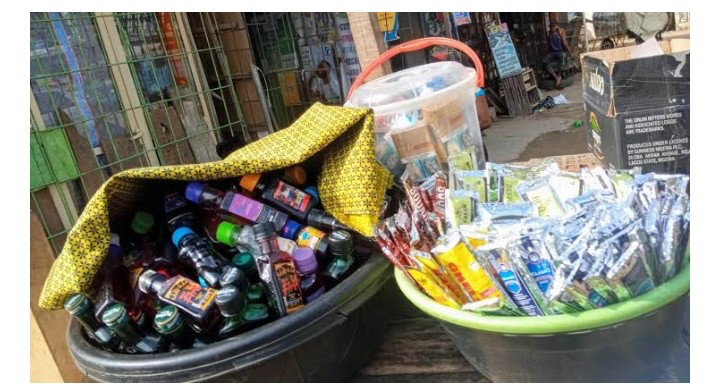
The Federal Government of Nigeria has ordered the suspension of enforcement activities by the National Agency for Food and Drug Administration and Control (NAFDAC) related to the ban on alcoholic beverages in sachets and small bottles.
This directive puts a temporary halt to the controversial policy that has been a subject of intense debate and enforcement actions by the regulatory agency.
According to reports, the decision to suspend the enforcement follows a high-level meeting between government officials and key stakeholders from the food and beverage industry.
The ban, which targeted spirits and alcoholic drinks packaged in sachets and polyethylene terephthalate bottles below 200 milliliters, was initially implemented by NAFDAC in February 2024.
The agency cited public health concerns, particularly the rising cases of alcohol abuse among young people and the negative social consequences associated with the cheap and easily accessible packaging.
The policy had drawn significant criticism from manufacturers, labor unions, and traders who argued that the abrupt ban would lead to massive job losses, factory closures, and severe economic hardship for thousands of Nigerians dependent on the industry’s value chain.
Industry groups estimated that over 500,000 jobs were at risk due to the enforcement of the ban, prompting urgent appeals for government intervention.
In response to these pressures, the Federal Government convened a stakeholders’ meeting to review the policy’s implications. Following the discussions, the government directed NAFDAC to suspend all enforcement activities related to the sachet alcohol ban with immediate effect.
This suspension is intended to allow for further consultations and a comprehensive review of the policy to find a balanced solution that addresses both public health objectives and the socio-economic welfare of citizens.
NAFDAC has yet to issue an official statement on the suspension order. The development marks a significant shift in the implementation of the ban and provides a temporary reprieve for manufacturers and distributors in the sector while the government seeks a more sustainable resolution to the contentious issue.