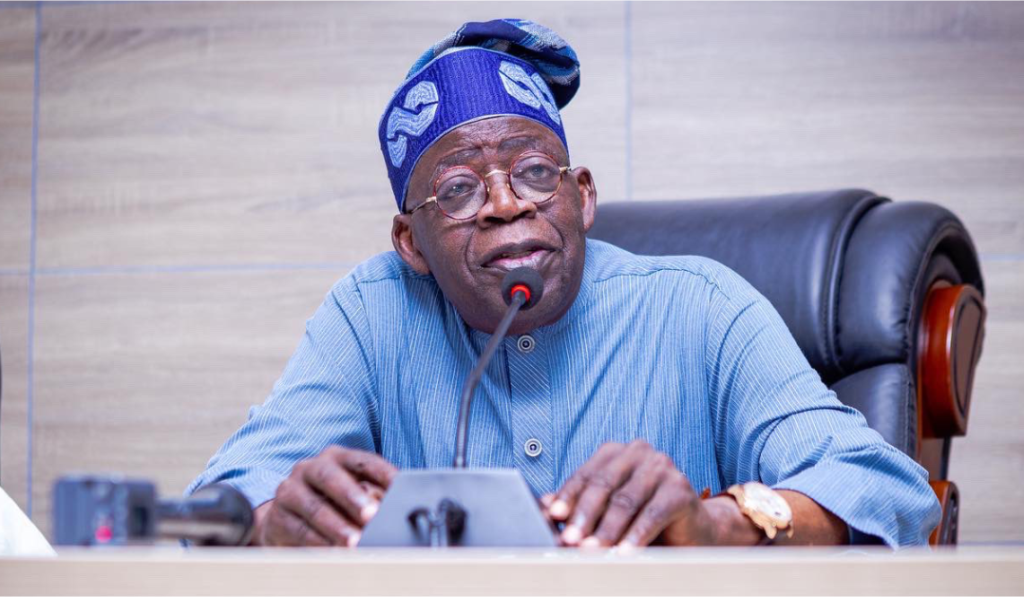
When the Bola Ahmed Tinubu administration released its latest wave of political appointments, what should have been a moment of national optimism quickly descended into controversy. What followed was not new: accusations of ethnic bias, regional favoritism, and outright nepotism. Nigerians had seen this movie before—eight long years of it during President Muhammadu Buhari’s tenure.
Yet, even though the script appears familiar, the national mood, political consequences, and socio-cultural implications have changed. Tinubu is not Buhari. The Nigeria of 2025 is not the Nigeria of 2015. This editorial dissects the eerie similarities between the two administrations and, more importantly, the critical differences that could make Tinubu’s missteps more politically dangerous and socially corrosive.
From the outset of his presidency in 2015, Muhammadu Buhari was accused of parochialism. He appointed trusted allies and loyalists—many of them from his native North-Western region and, more specifically, from his own Fulani ethnic group. Key positions in the security architecture—Army, Air Force, Police, DSS, and NSA—were dominated by Northerners. In a country already struggling with ethno-religious tensions, the optics were devastating.
In Buhari’s case, the response was widespread but complicated. His supporters often defended him with a familiar line: “He is only appointing those he can trust.” Others argued that his austere, no-nonsense personality meant he was less interested in balancing interests than in pushing his anti-corruption and security agenda. Still, the outrage was palpable, especially in the South-East and South-South, where many felt completely shut out of the government.
Perhaps the most tragic result of Buhari’s nepotistic governance was the deepening of mistrust between the regions. It hardened calls for secession in the East, fueled militancy in the Delta, and created a perception of second-class citizenship among millions. The administration rarely acknowledged these wounds, choosing silence over reconciliation.
Fast forward to 2025. Tinubu, the long-time political tactician and “kingmaker” of Lagos, finds himself accused of the same sin he once criticized. But this time, the alleged nepotism takes a southern flavor—particularly South-Western, Yoruba-centric.
Recent appointments in critical ministries, security sectors, and strategic government agencies have leaned heavily toward individuals with close personal or ethnic ties to the President. As with Buhari, Tinubu’s defenders cite “competence” and “loyalty.” But this defense falls flat in a country as large and diverse as Nigeria. The anger now comes not just from the traditionally marginalized East, but also from parts of the North who see the power pendulum swinging away from them.
The difference here is profound: Buhari came to power with a perception of rigid discipline and stoic detachment. Tinubu, on the other hand, built his legacy as a bridge-builder, a national strategist who could forge alliances across all geopolitical zones. His 2023 campaign branded him as “a man of the people, for all the people.” That image is now under siege.
Comparative Fallout: Then vs. Now
| Aspect | Buhari (2015–2023) | Tinubu (2023– ) |
|---|---|---|
| Ethnic Bias | North-Western and Fulani-dominant | South-Western and Yoruba-dominant |
| Public Reaction | Strong but often regionally focused | More nationally widespread and bipartisan |
| Media Narrative | Critical but somewhat muted, especially in early years | Highly charged, amplified by social media and opposition voices |
| Trust Level | Perceived as rigid but predictable | Seen as calculating and opportunistic |
| Political Leverage | Strong Northern bloc loyalty | Fragile coalition; Southern dominance may alienate North and East |
| Symbolic Damage | Reinforced perception of Northern supremacy | Undermines Tinubu’s pan-Nigerian appeal and Lagos technocrat image |
Where Buhari’s nepotism was framed as a product of his austere, military background, Tinubu’s version feels more transactional—rewarding political loyalty over national inclusivity. It smacks of political patronage rather than principled selection. This makes it arguably more corrosive, because it suggests a conscious prioritization of personal networks over nationhood.
A Generational Shift: Why the Backlash Is Louder Now
What Tinubu may not have fully accounted for is the dramatic shift in public consciousness since 2015. Nigeria now has a more politically aware, digitally connected, and economically anxious population. The #EndSARS protests of 2020 signaled a generational rupture. Youths are no longer willing to accept the old compromises. They are demanding transparency, meritocracy, and fairness—and they’re armed with social media megaphones.
In Buhari’s time, Twitter threads were critical, but fringe. Today, they trend globally. YouTube podcasts, Instagram reels, and TikTok videos are being used to deconstruct every government decision. Trust in government is at an all-time low, and the bar for leadership has been raised by desperation.
So, when Tinubu rolls out appointments that seem to ignore Nigeria’s ethnic balance, the backlash isn’t just louder—it’s faster, more organized, and potentially more damaging to his political capital.
This moment must not be viewed in isolation. It represents a crossroads for Nigeria’s idea of federal character. The federal character principle was introduced to heal the wounds of the civil war and to ensure that no Nigerian feels excluded from the promise of the federation. What we’re seeing, from Buhari to Tinubu, is its slow erosion—by both Northern and Southern elite political classes.
We must ask ourselves: is federal character a relic of the past, or a necessary mechanism for a divided country? Critics of the principle argue that it compromises merit. But this is a false binary. The real failure is the inability—or unwillingness—of leaders to identify competent individuals from all regions. Every state in Nigeria has sons and daughters of excellence. The political will to look beyond the tribe is what’s missing.
Conclusion: Déjà Vu Must Not Become Destiny
The Tinubu administration is still in its early years. It has time to reverse the perception that it is following the narrow, tribal path trodden by its predecessor. But time is running out.
If President Tinubu wishes to leave a legacy of unity and transformation, he must go beyond political reward systems and embrace the spirit of national inclusion. Nigeria has survived civil war, coups, insurgencies, and secessionist agitations—not because of the strength of its leaders, but because of the resilience of its people.
This is a pivotal moment. If history must repeat itself, let it do so not as tragedy or farce, but as redemption.
Nigeria is watching. This time, more closely than ever.