The Onisabe of Igbobi-Sabe, Oba Owolabi Adeyemi Adeniyi, has announced that the community’s 2026 Efe/Gelede Festival will take place between 29 November and 6 December in Yaba, Lagos, bringing traditional Yoruba masquerade performances and the Efe satirical tradition into the community’s end-of-year cultural calendar.
The festival programme, outlined in an announcement reported by Eko Hot Blog, spans four non-consecutive days during the eight-day period. The activities include an Efe night and three Gelede masquerade performances, with the traditional ruler serving as the royal host.
Igbobi-Sabe is part of the wider Yoruba cultural landscape of Lagos, and its festival offers a public occasion for performers and community members to sustain ceremonial practices associated with Gelede.
Gelede performances combine carved headdresses, costumes, music, dance and public presentation. Across Yoruba communities where the tradition is observed, the performances have long been associated with respect for mothers, senior women and women’s spiritual and social influence.
The Efe element is traditionally distinguished by spoken commentary and satire. Performers may use song, speech and humour to address community conduct and social relationships, while Gelede masqueraders bring the visual and choreographic elements of the celebration to the public space.
The precise form of a festival varies among participating communities. Accounts of Gelede elsewhere should not be treated as proof that a particular costume, ritual sequence or performer will appear in Igbobi-Sabe this year.
The heritage tradition has also drawn international attention. UNESCO recognises the oral heritage of Gelede, which is practised by Yoruba communities in Nigeria, Benin and Togo. Its significance extends beyond the individual festivals that keep the performances visible to new generations.
The forthcoming Igbobi-Sabe celebration creates an occasion for residents and visitors to encounter an artistic practice that involves several kinds of specialised work. Carvers fashion ceremonial headdresses, while performers, drummers, singers and costume makers contribute different skills to the finished presentation.
The involvement of craftspeople matters because those skills require repeated practice and transmission. A festival can provide an opportunity for younger participants to see how performance, costume, music and community organisation come together, although the organisers have not published participation figures or a formal training programme in the announcement reviewed.
The Onisabe’s role as royal host gives the event a recognised community setting. The festival’s published dates are 29 November to 6 December 2026, rather than a continuous daily programme throughout that period.
Organisers and attendees should consult the community’s official channels for the confirmed venue locations, performance times and any arrangements for public access. Those details were not independently established in the source material available for this report.
The festival arrives during a period of renewed attention to Yoruba cultural presentation in Lagos, where textile arts, performance and traditional dress are also featuring in other cultural programmes. Igbobi-Sabe’s Efe/Gelede celebration remains a distinct event with its own community organisers and ceremonial traditions.
The announced programme places Efe performance and Gelede masquerade at the centre of the Igbobi-Sabe gathering, beginning on Sunday, 29 November and concluding on Sunday, 6 December.
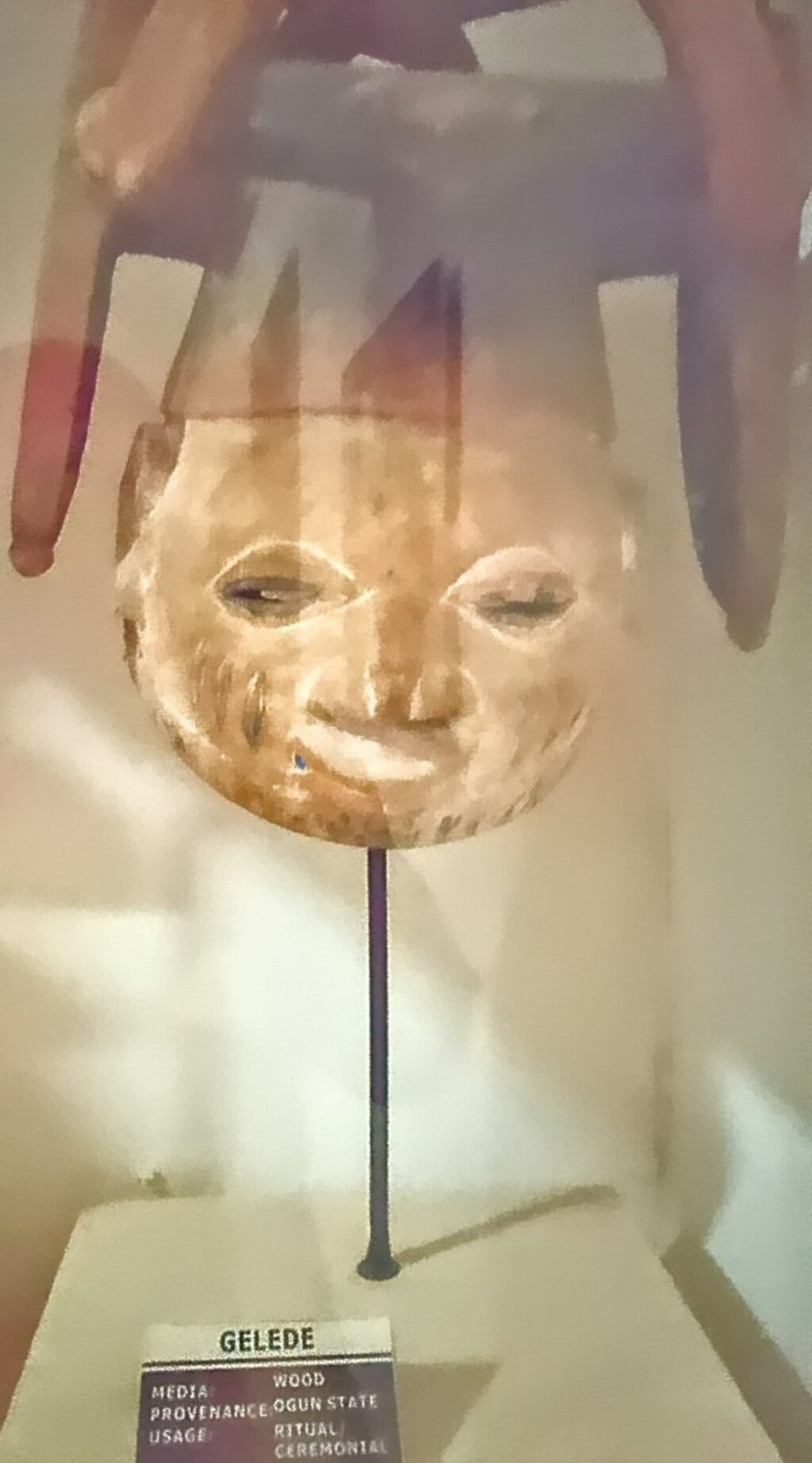
Featured image: Archival photograph of a Gelede ceremonial headdress at the National Museum, Ilorin, taken in September 2026 by CloudyMyst, Wikimedia Commons, licensed under CC BY-SA 4.0. Unmodified illustrative museum photograph, not an object or performance from the Igbobi-Sabe festival.