The Oba of Ado-Odo in Ogun State, Oba Olusola Lamidi-Osolo, has proposed a five-part cultural partnership between Nigeria and Brazil to protect Yoruba heritage, strengthen academic research and create opportunities for Afro-Brazilian communities to reconnect with ancestral traditions.
The monarch presented the proposals during an address at Universidade Federal Fluminense in Rio de Janeiro, where he called for practical cooperation between traditional institutions, universities, cultural organisations and young people. His address, titled “The Role of Traditional Leadership in Modern Cultural Sustainability and the Safeguarding of Sacred Heritage”, was reported in a statement released on Sunday, 8 November 2026.
Lamidi-Osolo said the historical connections between West Africa and Brazil remained visible in language, religious practice, food and community identity. He referred to Nagô and Anago identities, Candomblé traditions and the continued recognition of Yoruba deities including Sango, Osun, Yemoja and Ogun among communities of African descent in Brazil.
He also cited acarajé, a food closely associated with Afro-Brazilian culinary culture and related to the Yoruba akara, as an example of traditions that survived the Atlantic crossing. These cultural links formed the basis of his appeal for cooperation extending beyond ceremonial visits and expressions of shared ancestry.
The first proposed area is an organised programme of exchanges involving traditional rulers, scholars, artists and community representatives. Such visits, he suggested, could provide opportunities to document cultural practices and establish lasting relationships between institutions in the two countries.
A second proposal calls for joint university research on Yoruba language, genealogy, oral history and gastronomy. The monarch also recommended diaspora immersion programmes through which Brazilians of African descent could visit Ado-Odo and explore historical and cultural connections with communities in Ogun State.
His fourth proposal centres on digital archives and legal measures intended to safeguard sacred sites, traditional knowledge and living cultural practices. He warned that neglect and commercial exploitation could threaten heritage assets unless preservation efforts were supported by appropriate institutions and rules.
The final area concerns young people, with student exchanges, mentorship and cultural enterprise proposed as ways of passing knowledge to another generation. No signed bilateral agreement, funding allocation or implementation timetable was announced in the accounts of the address. The proposals remain recommendations rather than an established government programme.
Lamidi-Osolo also described the responsibilities of traditional leadership in preserving historical records and customary institutions. He pointed to the Oba-in-Council, the Afobaje kingmakers and the Itepa Ilu town council as elements of Ado-Odo’s traditional governance arrangements. His account traced the kingdom’s origins to Ile-Ife around 1050 AD, a historical claim presented as part of the royal address.
On conservation, the monarch identified 16 indigenous shrines, 16 Igbi-Ora drums and sacred natural locations, including Odo Iji, among the heritage assets he believed required protection. He argued that environmental damage could also affect cultural and religious practices associated with particular places.
The address connected these preservation concerns with the Yoruba concept of Omoluabi, which places importance on character, integrity and responsibility. The monarch said traditional institutions had a duty to preserve knowledge and maintain standards of community leadership rather than confining their work to ceremonial functions.
He concluded by inviting academics, students and Afro-Brazilian community members to the forthcoming Oduduwa Awori Festival in Ado-Odo. The invitation was presented as another opportunity for cultural exchange. A confirmed festival date and any formal commitments from Brazilian or Nigerian authorities were not established in the available accounts.
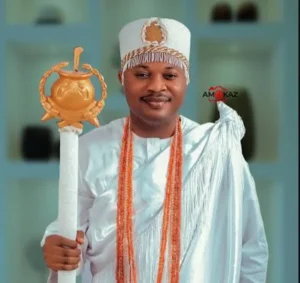
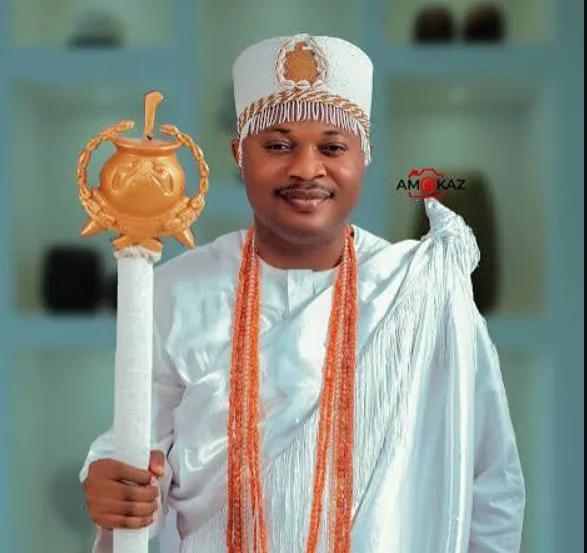
Image: Portrait of Oba Olusola Lamidi-Osolo, reproduced from a photograph carried by Punch, with visible AMOKAZ watermark.