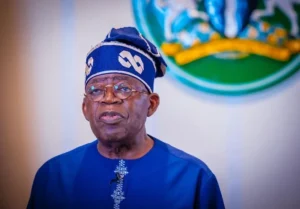
President Bola Tinubu has directed the Federal Ministry of Youth Development to prepare an implementation framework for recommendations from Nigeria’s 2026 National Youth Conference, requiring clear priorities, assigned responsibilities, realistic timelines and measurable indicators of progress.
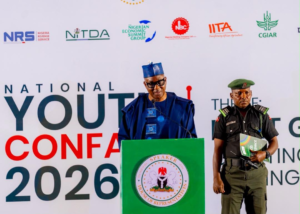
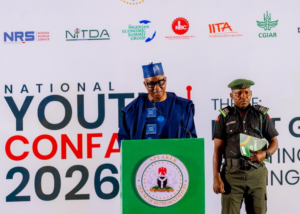
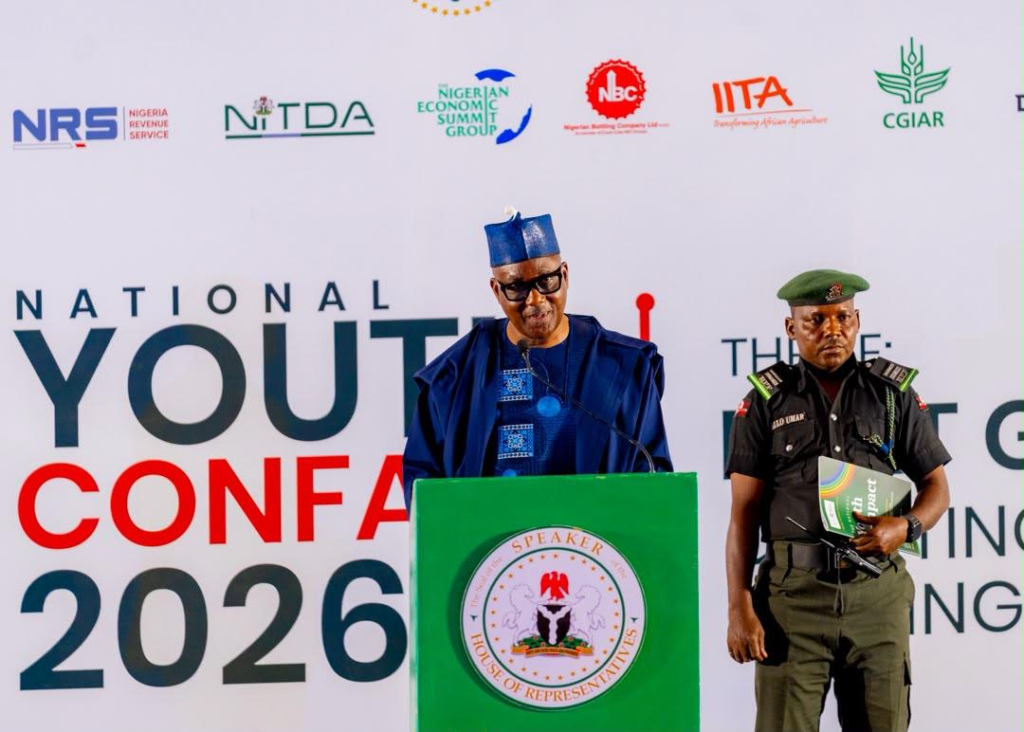
The directive was contained in the President’s address at the closing ceremony in Abuja on Monday, 9 November. Speaker of the House of Representatives Tajudeen Abbas delivered the address on Tinubu’s behalf, according to the text published by the State House.
Tinubu instructed Youth Development Minister Ayodele Olawande to work with other ministries, departments and agencies, state governments, businesses and development partners to turn the conference’s conclusions into a practical programme. He also called for young people to participate in monitoring implementation, rather than being consulted only during policy discussions.
“I do not want the recommendations of this Conference to become another report gathering dust on government shelves,” the President said in the published address. “I want them to become a guide for action.”
The directive establishes a further administrative step following the conference, but the State House address did not announce a completed implementation plan, a budget for delivering its recommendations or a deadline for publishing the framework. Those details will determine how the commitments can be assessed.
The conference brought together delegates for physical deliberations and included virtual consultations involving young Nigerians. The President said participants had raised questions about the country’s future and proposed responses to longstanding challenges.
He identified employment, living costs, access to education, business opportunities and community security among the concerns facing young Nigerians. The address acknowledged the difficulties associated with economic reforms and said government initiatives should translate into practical opportunities.
Tinubu referred to the Nigerian Education Loan Fund, the Three Million Technical Talent programme, YouthCred and the Nigerian Youth Academy as existing elements of his administration’s approach to education, skills and enterprise. His reference to those programmes was not accompanied by fresh independently verified figures on enrolment, disbursements, jobs created or beneficiaries at the conference.
The President said the proposed framework should involve young women, people with disabilities and young people in rural communities. He specifically asked that young Nigerians remain involved when policies are put into effect and their results are measured.
“You must not be invited to the table only when decisions are being discussed,” the address stated. “You must also have a place at the table when those decisions are being implemented.”
The Federal Ministry of Youth Development organised the conference with a planning committee and other stakeholders. The President commended the ministry and the delegates who participated both online and in person.
The announcement places responsibility on the ministry to coordinate across different levels of government and with private organisations. It does not, by itself, establish that any recommendation has been adopted as government policy. The conference outcomes and the eventual framework will need to be published or otherwise disclosed for the public to assess the scope of the proposed measures.
In his closing remarks, Tinubu urged young people to participate in democratic life and work across ethnic, religious and political differences. He formally declared the conference closed through the address delivered by Abbas.
The next identifiable step is the ministry’s preparation of the implementation framework, including its priorities, delivery responsibilities, timetable and measures of progress, as requested in the presidential directive.
Source: Presidency, State House, Abuja, address issued 9 November 2026. Featured image: State House, Abuja.