The House of Representatives has asked the Federal Government to secure the suspension of tertiary fee hikes across public institutions and ordered an investigation into the charges. Lawmakers warned that rising costs could undermine the Nigerian Education Loan Fund and restrict access to higher education.
The resolutions followed a motion sponsored by Ifeoluwa Ehindero, who represents Akoko South-West and Akoko South-East in Ondo State, at Tuesday’s plenary. The House called for greater public funding to reduce institutions’ reliance on revenue raised through student charges.
Ehindero said some universities, polytechnics and colleges of education had raised school fees and other mandatory charges by more than 100 per cent. He argued that the increases had been introduced without sufficient consultation or consideration of the financial pressures facing Nigerian families.
The House asked the Federal Ministry of Education and the National Universities Commission to engage institutional managements over suspending the increases. It also sought a comprehensive review of fee structures against prevailing economic conditions.
The resolution is a call for executive and institutional action. It does not establish that universities have reversed their charges or that a nationwide fee freeze has taken effect. The available reports of the proceedings did not include an implementation announcement from the ministry or the institutions concerned.
The House mandated its committees on University Education, Federal Polytechnics and Higher Technical Education, and Federal Colleges of Education to investigate the extent and justification of the increases. Speaker Tajudeen Abbas referred the matter to the relevant committees after the motion was adopted.
Ehindero, who chairs the House Committee on NELFUND, linked the dispute to the assumptions underpinning the student-loan programme. He said the scheme had been designed around existing tuition benchmarks and institutional cost structures, which sudden increases could disrupt.
He warned that unchecked increases could disadvantage students from poorer households and create disparities in loan allocation. His concerns about possible withdrawals from education and campus unrest were warnings about potential consequences, rather than findings that the inquiry had already established.
The motion cited section 18 of the Constitution, which sets equal and adequate educational opportunities among the objectives guiding government policy. The parliamentary intervention brings together the funding needs of public institutions and the affordability of their charges to students.
Administrative charges were already under federal review before Tuesday’s motion. The Education Ministry’s document repository records a high-level committee on standardising administrative and other charges associated with NELFUND transactions across public tertiary institutions.
The repository entry is dated 30 June 2026 and records an update on 11 September.
According to the ministry’s introduction to the committee report, the panel was inaugurated on 14 May 2025 and headed by its permanent secretary, Abel Enitan. Its membership included representatives of NELFUND, the National Universities Commission, universities and departments responsible for different parts of tertiary education.
That earlier committee’s secretariat was placed at the NUC in Abuja. The newly mandated House investigation concerns the extent and justification of recent institutional fee increases, while lawmakers’ separate funding request asks the government to consider higher subventions.
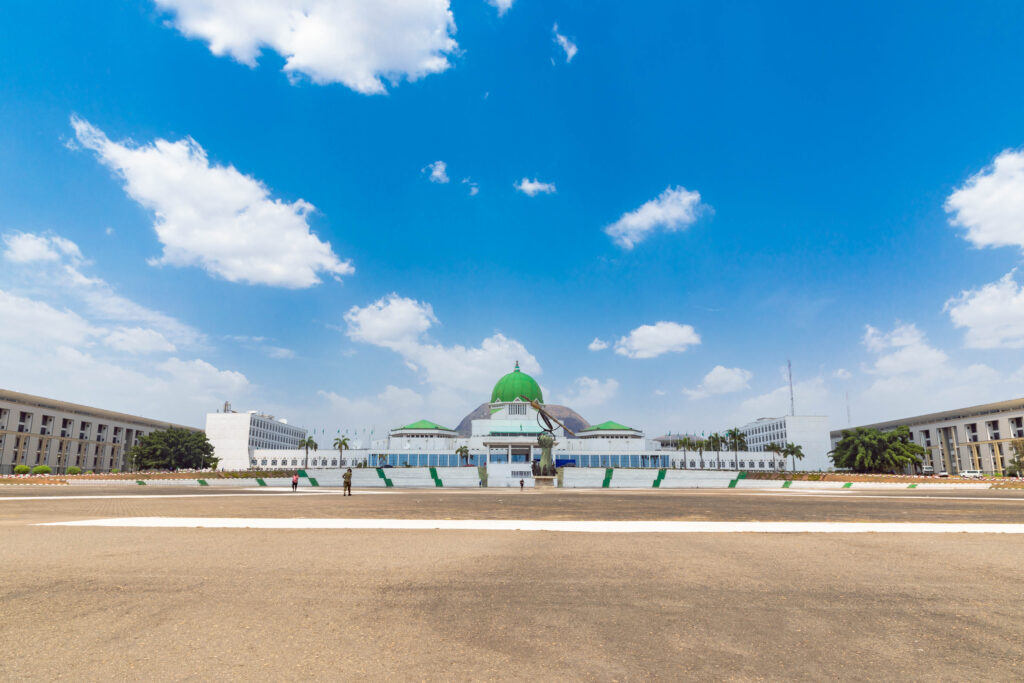
Image: Ovinuchi Prince Ejiohuo, 26 March 2019. Source, CC BY-SA 4.0. Resized archive exterior of the National Assembly, not the 27 October 2026 proceedings.