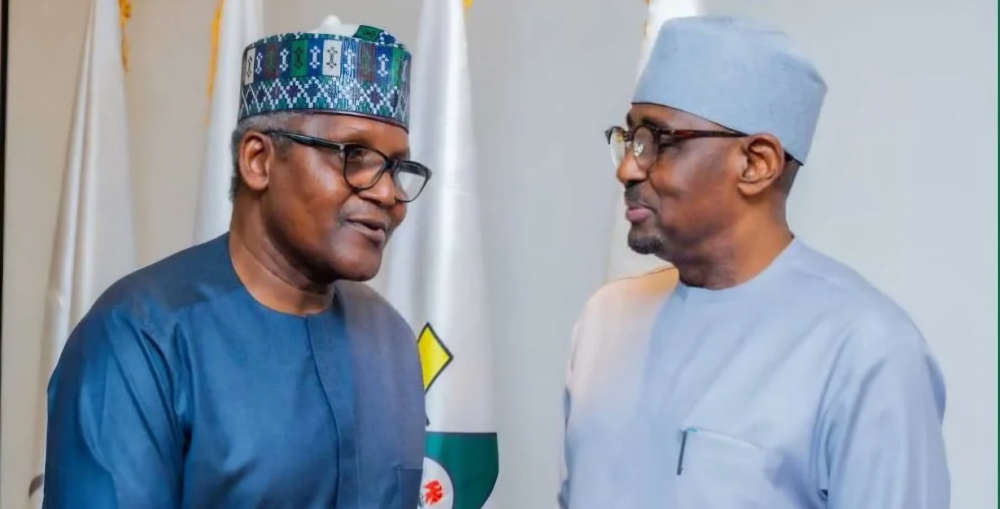
The House of Representatives Joint Committee on Petroleum Resources has formally summoned billionaire industrialist Aliko Dangote and the Chief Executive Officer of the Nigerian Midstream and Downstream Petroleum Regulatory Authority, Farouk Ahmed, to appear before it.
The summons follows a series of serious public allegations and counter-allegations between the two powerful figures, which lawmakers say have created destabilizing tensions in the country’s critical petroleum sector.
The joint committees, led by Hon. Ikenga Imo Ugochinyere and Hon. Henry Okogie, convened an emergency meeting in response to what they described as a dangerous and growing conflict.
This conflict stems directly from accusations made by Dangote during a press briefing on Sunday, where he alleged corruption and economic sabotage against the NMDPRA boss, specifically questioning how Ahmed could afford millions of dollars for his children’s foreign education on a public servant’s salary.
Lawmaker Ugochinyere stated the committees were compelled to act swiftly to prevent further escalation at a sensitive time when the government and industry are working to stabilize fuel supply and pricing following the removal of subsidies.
He emphasized that only a clear and unbiased understanding of the underlying problems would allow the National Assembly to broker a lasting solution.
The committee has appealed to both Dangote and Ahmed to immediately cease all public exchanges and media comments while the legislative intervention is ongoing.
In addition to the personal allegations, the committee revealed it has received formal petitions touching on other critical industry concerns.
These include the controversial issuance of fuel import licenses and fundamental questions about whether Nigeria’s domestic refineries, including Dangote’s massive new facility, actually possess the capacity to meet the nation’s daily petroleum needs.
The decision to summon both men reflects the unanimous position of the committee following its closed-door deliberations, aiming to use parliamentary authority to address both the specific allegations and the broader regulatory challenges facing the sector.