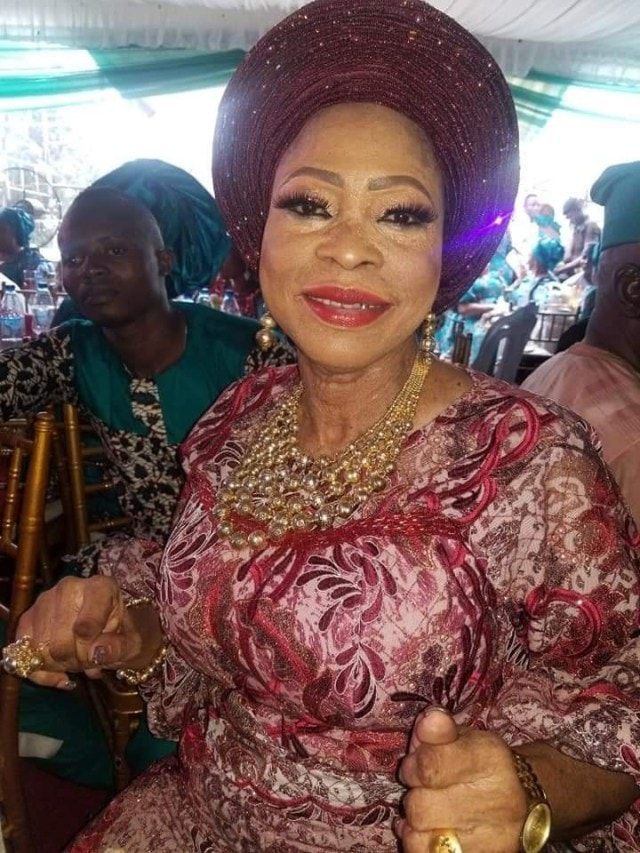
Alhaja Monsurat Ashabi Oluwatoyin Oyemade Rufai Abraham, widely known as Toyin Igbira, carved an infamous legacy as Nigeria’s most notorious female drug baroness.
Her popular nickname, Bùjẹ̀búdánù, meaning “the one who spends and squanders without limit,” perfectly captured her lavish lifestyle and ostentatious spending that marked her reign in the narcotics underworld.
Born in 1963 in Mushin, Lagos, Toyin’s early life was modest. She attended St. Paul’s Primary School in Idi Oro and later Reagan Memorial Girls’ High School but dropped out in junior secondary school 2. Without formal qualifications, she joined her mother in selling smuggled cigarettes from Cotonou before moving on to fabrics business.
Toyin’s rise to drug empire queenpin began in 1994 when she was introduced to heroin trafficking by a London-based Nigerian named Fatai. Fatai disguised heroin as a rare horse medicine tablet, which Toyin initially sold without knowing its true nature.
After Fatai’s mysterious death in 1996, Toyin took control of his drug network. Her operations quickly expanded internationally with links spreading from Lagos to London, Zurich, Chicago, and New York. While publicly running a textile business, she was secretly trafficking heroin often concealed in innovative and brazen ways—ranging from wheelchairs used by disabled athletes at the 1996 Atlanta Paralympic Games to containers and fuel tanks.
Her reputation for excess was legendary. Toyin earned the sobriquets “the drug queen,” “the lioness,” and “the living ghost,” with Bùjẹ̀búdánù reflecting her habit of lavishly spraying cash at parties and sponsoring musicians and films, fueling rumors of endless wealth.
Despite years of evading law enforcement, Toyin was first arrested in December 1997 by the National Drug Law Enforcement Agency (NDLEA) and jailed at Kirikiri Maximum Prison. Shocking many, Justice Abubakar Abdulkadir Jega released her on bail in 1999, personally escorting her away to prevent immediate re-arrest. Undeterred, she resumed her high-profile lifestyle, celebrated by some Fuji musicians who immortalized her in songs.
NDLEA, frustrated but relentless, filed fresh charges against her including conspiracy to export heroin to Zurich and New York. Yet, legal battles were marked by delays and stalling tactics, allowing Toyin to slip through the cracks. A second major arrest came in 2002 at Murtala Muhammed International Airport where she was caught with 72 wraps of heroin destined for the US.
Ultimately, her downfall came not from law enforcement but from illness. Diagnosed with ovarian cancer in 2009 in the UK, she battled the disease through treatments in Europe and America, turning to born-again Christianity after relapse in 2018. Toyin died quietly in Surulere in July 2019, aged 56. She left behind a complicated legacy, including a husband, three children, and substantial properties across Nigeria and abroad.
Toyin Igbira’s story is a chilling illustration of how drug trafficking intertwined with society, culture, and power in Nigeria during a turbulent era. Her notoriety remains a cautionary tale about crime, corruption, and the elusive pursuit of justice.