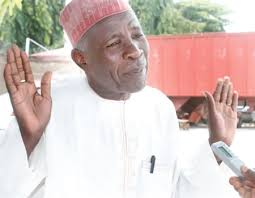
Former political ally of ex-President Muhammadu Buhari, Buba Galadima, has raised alarms over Nigeria’s electoral integrity, declaring that votes may not count in the 2027 general elections unless urgent reforms are enacted. Speaking in an exclusive interview, the elder statesman accused the political class of prioritizing personal gain over public welfare and warned that without amendments to the Electoral Act, election outcomes would continue to be manipulated.
Galadima, who parted ways with the ruling All Progressives Congress (APC) following his removal from key party structures during Buhari’s administration, asserted that Nigeria’s democracy is under siege. “If we don’t amend the Electoral Act, forget 2027. Courts will keep handing victories to the highest bidder, just like in Edo and Kano,” he said, referencing controversial judicial rulings on recent elections.
He lambasted leaders for indifference to widespread suffering, noting that hunger and poverty have eroded public faith in governance. “Our leaders are only concerned about themselves. The masses must rise and demand justice,” Galadima declared, calling for a united front across ethnic and religious lines to uphold democratic principles.
The outspoken critic also weighed in on the political crisis in Rivers State, describing the declaration of emergency rule as an overreach. “An unelected official cannot displace an elected governor. Nigerians must reject this impunity,” he said, cautioning President Bola Tinubu against allowing associates to undermine his administration. “Those around him may destroy his government if he’s not careful.”
Galadima reserved sharp criticism for the judiciary and legislature, accusing both institutions of capitulating to executive pressure. “When courts and lawmakers abandon their roles, democracy collapses,” he said, citing the Senate’s internal conflicts and controversial court rulings on Kano’s emirship dispute as evidence of systemic failure.
Despite his grim outlook, Galadima expressed hope that citizen mobilization could force change. “Revolutions don’t start with violence—they begin when people say ‘enough.’ Nigeria will reach its breaking point, and the powerful will flee,” he predicted, urging the media to promote national unity over divisive narratives.
On the escalating tensions in Kano, he condemned the police invitation to Emir Sanusi II as politically motivated. “No one would dare summon the Oba of Lagos. This is a ploy to destabilize the North,” he alleged, warning that such tactics risked nationwide unrest.
Galadima’s final admonition to Tinubu was stark: “Your allies may be your downfall. Only those who want peace truly support you.” As Nigeria grapples with economic hardship and institutional decay, his words underscore a deepening crisis of confidence in the nation’s leadership.